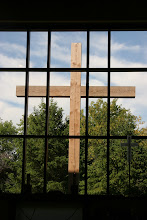
Jesus took with him Peter and John and James, and went up on the mountain to pray. (Luke 9: 28)
A windstorm arose on the sea, so great that the boat was being swamped by the waves; but Jesus was asleep. (Matthew 8: 24)
My prayer-life isn’t exactly what you would call exemplary. I work full time, take care of a house and a family, including two dogs, and even find time to fit in a few hobbies. Quiet time spent alone with God comes at a premium. Sometimes I wonder how people ever find time to pray.
Prayer, especially in our busy lives, is important. Prayer is the way that we maintain our relationship with God. In this week’s scripture reading, Jesus reminds us of the importance of prayer. He takes his disciples up to the top of a mountain specifically to pray. Wouldn’t it be great if Jesus would come around once in a while and take us with him to pray? He would certainly hold us accountable.
What is a good prayer life? How do we pray correctly? Do we have to be kneeling alone, silently, for an hour in a dimly lit room? In a little book called Pray All Ways, Edward Hays reminds us that prayer is not an event but a way of living our lives. He teaches that “Jesus has not called all his followers to abandon all other activities of family, life and work to continually and solely engage in … times of prayer… The different activities of our daily lives are not distractions from prayer, but rather the rich soil for prayer.” (p. 14, 15)
Some of the chapters in Hays’ book are entitled, “How to pray with our feet,” and “Feasting as prayer.” My favorite, however, is one of the last chapters, called “The prayer of napping.”
Napping has always been one of my guilty pleasures. When I’m at home for the day, I usually lie down for an afternoon siesta around 2 o’clock. Even on working days, I manage to close my eyes for a few minutes when I get home before I start preparations for the evening’s meal and activities.
Hays reminded me that even Jesus had to rest in order to be refreshed for his work. The story of Jesus stilling the storm (Mark 4: 35-40) shows us “an interesting and unusual form of prayer. Interesting and important for us is the experience we find there: Jesus engaged in the prayer of napping!” (p. 197)
We have to take care of things in our lives, but we also have to stop and allow God to take care of us. When we sleep, we are letting go of everything – especially control – and trusting that God will take over. We are allowing God to take over.
Hayes writes, “as zealous Christians, should we not be ‘on our toes,’ alert, awake, and busy? For who wants to be caught napping, which is a sure sign of carelessness? But wasn’t Jesus caught napping that afternoon on the lake? He was, to put it plainly, careless. To be careless is to be care-less, to be without care or anxiety. He was a casual and relaxed rabbi-teacher who was well aware that not he, but the Father was in control of the universe. That state of awareness is prayer. It is a way of facing the Mystery. Since God was in charge, why worry and be upset with undue care, for he and his friends were held in God’s love which would shield them from all evil.” (p, 199-200)
A Prayer for Nap Time
(or for any time when we desire to be “out- of- control” or to do “nothing-of profit”)
Well, Lord, it’s not yet time to quit – all around me life is buzzing. Nevertheless, I need to let go of being busy and, at times, just to relax. May each nap time be a sacrament for me, giving me the grace to be aware that you are able to use stones to praise you and to raise up your kingdom. My time of doing nothing – of letting go – remind me that it is you, my God, who is bringing about the kingdom, and that the more I can let you do it – especially in the midst of my greatest efforts – the more beautifully and gracefully the age of justice and peace can come in this tired world.
Show me that if I can let go of trying to control people, events, and especially my futile attempts at controlling you, holiness will flow to me more quickly and surely. May each short time of leisure renew my spirit, fill my heart with insights and restore my body. As your Son, Jesus, let go of his cares and fell asleep in the story-tossed boat, may I now let go of my cares and rest in you, my beloved God and ever-vigilant lover. Amen. (Hayes, p. 207-08)
Hayes, Edward Pray All Ways Forest of Peace, Ave Maria Press (Notre Dame, IN, 1981, 2007)
Monday, February 8, 2010

Monday, February 1, 2010
What makes you mad?
Be angry and do not sin; do not let the sun go down on the cause of your anger. You must put away every kind of bitterness, anger, wrath, quarreling, and evil, slanderous talk. Instead, be kind to one another, compassionate, forgiving one another, just as God in Christ also forgave you. (Ephesians 4:26, 31-32)
I get mad when things don’t go the way I think they should go. I get mad when a wrench gets thrown into the works. I get mad when somebody does me wrong.
I found this story about anger that I could relate to, and I’d like to share it with you.
Molly and Mort have been married since Monday. For months they have been planning a honeymoon tour of Kansas. On Tuesday they got as far as Indianapolis. They spent the night in the Ramada Inn, and were set to make it to Topeka by nightfall on Wednesday. Molly has heard so much about Topeka. She is sure this is going to be a perfectly wonderful beginning to a storybook honeymoon. But by now, Mort, returning to the room, has a sheepish look on his face.
“What’s up?” Molly asks. “Are we ready to go?” “I’m awfully sorry,” says Mort. “For safe keeping I set the keys to the rental car just inside the trunk while I loaded it. And you know when I next remembered they were there? It was a split second before I heard the trunk lid snap shut as firm and final as anything.” To hide his embarrassment, interrupt the line of vision between their eyes, and to protect him from the emotion that he feels rising like a mighty tide in his bride, he approaches her for a kiss.
Molly is not in the mood for a kiss, and becomes less so when they discover that the locksmith isn’t available until 4:00 pm. The hope of Topeka by nightfall is dead. Molly is mad. You could say she is frustrated; the circumstances are contrary to her wishes. You could say she is disappointed: she was expecting something wonderful and now sees that it won’t happen. But her emotion is more than irritation and disappointment. It is anger. In addition to seeing her circumstances as bad, she sees that it is somebody’s fault.
So what makes you mad? Change a few details in this story, and I can say that I’ve felt exactly the same way that Molly feels, especially towards my husband, several times just in the last week!
There are, of course, other things that make me mad. I get mad about how global warming and the influx of technology are destroying native culture in Alaska. I get mad that because of a continually faltering economy, many of my friends and neighbors still don’t have jobs. I get mad that we can’t protect each other from disease and earthquakes and grief. I see terrible things happening and I wonder who is to blame, and who is going to make it right.
It’s not good to be an angry person. I recently discovered a new word – irascible – the definition of which is being an angry sort of person, marked by hot temper and easily provoked. Sometimes, when I consider all the things I have to be mad about, I feel like that is the direction I may be headed.
So what do I do with my anger? Is it ok to be angry sometimes? What on earth is human anger good for?
Biologists point out that anger is very useful as a signal to the offender. Anger is a part of our original human nature, just as love is. It is not necessarily sinful. Even God gets angry when we sin – his anger is not directed at us, but what we do. And Jesus got angry as well. Jesus got angry at those who obstructed compassion, and eventually plotted against his life. Because Jesus loved us so much, his anger came from love. But Jesus also loved the plotters. With the first sign of true repentance his eye for their goodness overwhelmed his eye for their sin. Remember the repentant thief on the cross next to Jesus? Jesus immediately forgave him, promising him, “Today you will be with me in paradise.”
Paul tells the Ephesians that it’s ok to be angry, but not to sin. Anger turns to sin if it becomes your normal mode of operation – if you become truly irascible. When he says, “Put away from you all bitterness and wrath and anger and wrangling and slander, together with all malice,” I don’t think he is saying that we should never be angry, but that we should not always be angry.
Remember how God treated those Israelites who grumbled and complained in the wilderness for 40 years? God was mad at them again and again. And then God forgave them, and helped them out of the mess they’d gotten themselves into again and again. God’s anger at them came from God’s love for them.
We all get mad at something, sometime. When we do, we can remember Paul’s words, and God’s love. We can take the initiative of saying a kind word, telling a joke on ourselves, offering a compromise or making a gesture of reconciliation. A little “I’m sorry” goes a long way. We can say a little prayer. When we do this, we will see something wonderful happen. Others will follow our lead, and we will bear the fruit of the Holy Spirit.
I get mad when things don’t go the way I think they should go. I get mad when a wrench gets thrown into the works. I get mad when somebody does me wrong.
I found this story about anger that I could relate to, and I’d like to share it with you.
Molly and Mort have been married since Monday. For months they have been planning a honeymoon tour of Kansas. On Tuesday they got as far as Indianapolis. They spent the night in the Ramada Inn, and were set to make it to Topeka by nightfall on Wednesday. Molly has heard so much about Topeka. She is sure this is going to be a perfectly wonderful beginning to a storybook honeymoon. But by now, Mort, returning to the room, has a sheepish look on his face.
“What’s up?” Molly asks. “Are we ready to go?” “I’m awfully sorry,” says Mort. “For safe keeping I set the keys to the rental car just inside the trunk while I loaded it. And you know when I next remembered they were there? It was a split second before I heard the trunk lid snap shut as firm and final as anything.” To hide his embarrassment, interrupt the line of vision between their eyes, and to protect him from the emotion that he feels rising like a mighty tide in his bride, he approaches her for a kiss.
Molly is not in the mood for a kiss, and becomes less so when they discover that the locksmith isn’t available until 4:00 pm. The hope of Topeka by nightfall is dead. Molly is mad. You could say she is frustrated; the circumstances are contrary to her wishes. You could say she is disappointed: she was expecting something wonderful and now sees that it won’t happen. But her emotion is more than irritation and disappointment. It is anger. In addition to seeing her circumstances as bad, she sees that it is somebody’s fault.
So what makes you mad? Change a few details in this story, and I can say that I’ve felt exactly the same way that Molly feels, especially towards my husband, several times just in the last week!
There are, of course, other things that make me mad. I get mad about how global warming and the influx of technology are destroying native culture in Alaska. I get mad that because of a continually faltering economy, many of my friends and neighbors still don’t have jobs. I get mad that we can’t protect each other from disease and earthquakes and grief. I see terrible things happening and I wonder who is to blame, and who is going to make it right.
It’s not good to be an angry person. I recently discovered a new word – irascible – the definition of which is being an angry sort of person, marked by hot temper and easily provoked. Sometimes, when I consider all the things I have to be mad about, I feel like that is the direction I may be headed.
So what do I do with my anger? Is it ok to be angry sometimes? What on earth is human anger good for?
Biologists point out that anger is very useful as a signal to the offender. Anger is a part of our original human nature, just as love is. It is not necessarily sinful. Even God gets angry when we sin – his anger is not directed at us, but what we do. And Jesus got angry as well. Jesus got angry at those who obstructed compassion, and eventually plotted against his life. Because Jesus loved us so much, his anger came from love. But Jesus also loved the plotters. With the first sign of true repentance his eye for their goodness overwhelmed his eye for their sin. Remember the repentant thief on the cross next to Jesus? Jesus immediately forgave him, promising him, “Today you will be with me in paradise.”
Paul tells the Ephesians that it’s ok to be angry, but not to sin. Anger turns to sin if it becomes your normal mode of operation – if you become truly irascible. When he says, “Put away from you all bitterness and wrath and anger and wrangling and slander, together with all malice,” I don’t think he is saying that we should never be angry, but that we should not always be angry.
Remember how God treated those Israelites who grumbled and complained in the wilderness for 40 years? God was mad at them again and again. And then God forgave them, and helped them out of the mess they’d gotten themselves into again and again. God’s anger at them came from God’s love for them.
We all get mad at something, sometime. When we do, we can remember Paul’s words, and God’s love. We can take the initiative of saying a kind word, telling a joke on ourselves, offering a compromise or making a gesture of reconciliation. A little “I’m sorry” goes a long way. We can say a little prayer. When we do this, we will see something wonderful happen. Others will follow our lead, and we will bear the fruit of the Holy Spirit.
Monday, January 25, 2010
What about them?
“In the waters of baptism, we are reborn children of God and inheritors of eternal life.” (from the service of Holy Baptism, ELW)
“Woe, woe, O great city, Babylon the powerful city! For in a single hour your doom has come!”(Revelation 18:10)
As a pastor, I often get asked questions that I don’t have answers for, for example, questions about heaven and hell and God’s judgment.
Most people don’t really wonder about their own face to face meeting with God. As baptized children of God, we are confident that our baptismal promises hold up. Eugene Peterson observes that even in the face of accumulating and not-yet-avenged justice, it is most remarkable that communities of faith persevere in believing that God is just and will judge. (Reversed Thunder, p. 138)
We wonder about what will happen to the other people, the murderers, the child molesters, the cheaters, the atheists. It is a question we have been asking for thousands of years.
How long must I bear pain in my soul, and have sorrow in my heart all day long? How long shall my enemy be exalted over me? (Psalms 13:2 NRSV)
Why do we wonder about these “other” people when we are confident in our promise of salvation? Do we hope we can do something to help them turn around and repent? Or do we wish for them a swift and just punishment? Sometimes life doesn’t seem fair. We don’t always get, on this earth, what we deserve.
The book of Revelation shows us, in so many ways, the world in which we live. It provides “images that show us what is going on in our lives. ‘If there are mysterious powers around,’ a character in a Saul Bellow novel says, ‘only exaggeration can help us to see them.’” (Reversed Thunder, 145)
Revelation exaggerates not only what is going on around us, but it exaggerates our own lives, calls each one of us to examine how we live, and why we need to repent. Each of us will face God and be called to account for our lives. And each of us will be forgiven.
Revelation shows that God is in control of the whole universe in heaven and on earth. Revelation reminds us that our relationship with God begins with worship.
Eugene Peterson writes, “The word hallelujah occurs in Revelation for the first time in Chapter 19, verse 1. The timing is exactly right, protecting our gratitude and relief for judgment from degenerating into gloating over the judged… Longing for judgment is only a step removed from a demand for revenge. The desire for God’s judgment always totters on the edge of wanting to see our enemies writhe in pain. The saint, wanting God’s judgment to set things right, has a way of slithering into the sadist who takes pleasure in seeing his tormentors punished. [In Revelation] four hallelujahs pull us from the edge of gloating over pain and back to the act of worship where we are humble and adoring in the presence of the Glory.” (Reversed Thunder, 148-9)
“In the waters of baptism, we are reborn children of God and inheritors of eternal life.” Amen.
“Woe, woe, O great city, Babylon the powerful city! For in a single hour your doom has come!”(Revelation 18:10)
As a pastor, I often get asked questions that I don’t have answers for, for example, questions about heaven and hell and God’s judgment.
Most people don’t really wonder about their own face to face meeting with God. As baptized children of God, we are confident that our baptismal promises hold up. Eugene Peterson observes that even in the face of accumulating and not-yet-avenged justice, it is most remarkable that communities of faith persevere in believing that God is just and will judge. (Reversed Thunder, p. 138)
We wonder about what will happen to the other people, the murderers, the child molesters, the cheaters, the atheists. It is a question we have been asking for thousands of years.
How long must I bear pain in my soul, and have sorrow in my heart all day long? How long shall my enemy be exalted over me? (Psalms 13:2 NRSV)
Why do we wonder about these “other” people when we are confident in our promise of salvation? Do we hope we can do something to help them turn around and repent? Or do we wish for them a swift and just punishment? Sometimes life doesn’t seem fair. We don’t always get, on this earth, what we deserve.
The book of Revelation shows us, in so many ways, the world in which we live. It provides “images that show us what is going on in our lives. ‘If there are mysterious powers around,’ a character in a Saul Bellow novel says, ‘only exaggeration can help us to see them.’” (Reversed Thunder, 145)
Revelation exaggerates not only what is going on around us, but it exaggerates our own lives, calls each one of us to examine how we live, and why we need to repent. Each of us will face God and be called to account for our lives. And each of us will be forgiven.
Revelation shows that God is in control of the whole universe in heaven and on earth. Revelation reminds us that our relationship with God begins with worship.
Eugene Peterson writes, “The word hallelujah occurs in Revelation for the first time in Chapter 19, verse 1. The timing is exactly right, protecting our gratitude and relief for judgment from degenerating into gloating over the judged… Longing for judgment is only a step removed from a demand for revenge. The desire for God’s judgment always totters on the edge of wanting to see our enemies writhe in pain. The saint, wanting God’s judgment to set things right, has a way of slithering into the sadist who takes pleasure in seeing his tormentors punished. [In Revelation] four hallelujahs pull us from the edge of gloating over pain and back to the act of worship where we are humble and adoring in the presence of the Glory.” (Reversed Thunder, 148-9)
“In the waters of baptism, we are reborn children of God and inheritors of eternal life.” Amen.
Monday, January 18, 2010
A New Year, the same you
Do you not know that your body is the temple of the Holy Spirit who is in you, whom you have from God, and you are not your own? For you were bought at a price. Therefore glorify God with your body. (1 Corinthians 6:19)
It’s that time of the year when we are trying to fulfill our New Year’s resolutions. Most of the festivities of the holidays are over, and even though I still have about 3 dozen Christmas cookies left in the walk-out freezer (the porch), I am trying to eat healthier and lose 10 pounds. I should just throw those little tempters out.
I heard on the radio this morning that the most common New Year’s resolutions have to do with money and health. These things are at the top of the list of things that we want to improve, and yet we really need to work hard at improving them.
According to an article in Seeds for the Parish, “Health is on the tip of the nation’s tongue these days. Health insurance reform, influenza, depression, childhood obesity, the plight of the uninsured … these top a long list of challenging, health-related topics. But there’s a bright spot. Each of us is a steward of gifts given. As a new creation in Christ, we can take steps, today, to change our lifestyle. As individuals, family members, neighbors and congregational leaders, we can work—to the best of our ability —to be healthier in mind, body and spirit.”
What are you doing to respect the temple of the Holy Spirit that is your body, the gift God has given you in which you dwell? You are not simply changing your shape when you chose to live in a healthy way. You are worshiping the one who created you and loves you, even through your struggles and temptations.
Eight reasons to Live Well
1. To be a more effective leader for the sake of the world
2. To role-model healthy behaviors for our children
3. To have a healthier relationship with God
4. To endure hardship with resilience and grace
5. To feel better in mind and body
6. To avoid lifestyle-related illness
7. To better steward gifts given by God
8. To age with strength and dignity
Remember, in baptism you are a new creation in Christ. Every day, and at all times, you can make the sign of the cross on your forehead remembering your baptism and begin anew.
It’s that time of the year when we are trying to fulfill our New Year’s resolutions. Most of the festivities of the holidays are over, and even though I still have about 3 dozen Christmas cookies left in the walk-out freezer (the porch), I am trying to eat healthier and lose 10 pounds. I should just throw those little tempters out.
I heard on the radio this morning that the most common New Year’s resolutions have to do with money and health. These things are at the top of the list of things that we want to improve, and yet we really need to work hard at improving them.
According to an article in Seeds for the Parish, “Health is on the tip of the nation’s tongue these days. Health insurance reform, influenza, depression, childhood obesity, the plight of the uninsured … these top a long list of challenging, health-related topics. But there’s a bright spot. Each of us is a steward of gifts given. As a new creation in Christ, we can take steps, today, to change our lifestyle. As individuals, family members, neighbors and congregational leaders, we can work—to the best of our ability —to be healthier in mind, body and spirit.”
What are you doing to respect the temple of the Holy Spirit that is your body, the gift God has given you in which you dwell? You are not simply changing your shape when you chose to live in a healthy way. You are worshiping the one who created you and loves you, even through your struggles and temptations.
Eight reasons to Live Well
1. To be a more effective leader for the sake of the world
2. To role-model healthy behaviors for our children
3. To have a healthier relationship with God
4. To endure hardship with resilience and grace
5. To feel better in mind and body
6. To avoid lifestyle-related illness
7. To better steward gifts given by God
8. To age with strength and dignity
Remember, in baptism you are a new creation in Christ. Every day, and at all times, you can make the sign of the cross on your forehead remembering your baptism and begin anew.
Monday, January 11, 2010
Peanuts and Wisdom
And Solomon said , “And now, O Lord my God, you have made your servant king in place of my father David, although I am only a little child; I do not know how to go out or come in.
Give your servant therefore an understanding mind to govern your people, able to discern between good and evil; for who can govern this your great people?" 1 Kings 3: 7,9
George Washington Carver was born in 1865, and died in 1943 at the age of 78. A former slave, during his life he became inventor, scientist, businessperson, service industry employee, agriculturist, medical worker, artist, author, lecturer, domestic, reformer, and performing artist.
As a member of the faculty of Iowa State College of Agriculture and Mechanic Arts, he worked with agricultural products and developed industrial applications from farm products. His research developed 325 products from peanuts, 108 applications for sweet potatoes, and 75 products derived from peanuts. He also developed over 500 dyes and pigments from 28 different plants, and was responsible for the invention in 1927 of a process for producing paints and stains from soybeans, from which three separate patents were issued.
“God’s little workshop” was the name George Washington Carver gave his laboratory. It was there that the famous scientist asked in prayer to discover the uses of what was then a lowly, unesteemed crop—peanuts.
“Dear Mr. Creator,” the humble man began, “please tell me what the universe was made for.”
“Ask for something more in keeping with that little mind of yours,” God answered.
So Carver tried again. “Dear Mr. Creator, what was man made for?”
Again the Lord replied, “Little man, you ask too much. Cut down the extent of your request and improve the intent.”
So the scientist tried once more. “Then, Mr. Creator, will you tell me why the peanut was made?”
“That’s better,” the Lord said, and from that day on Carver began to discover more than 300 uses for the lowly peanut!
What do George Washington Carver and King Solomon have in common? Both asked for a hearing heart. In 1 Kings 3:6-9, Solomon recognized that God’s kindness to David was because of his father’s faithfulness to God, which manifested itself in righteous actions and upright attitudes of heart. Also, he was concerned that he would be able to function effectively as the representative of God. His responsibility as the leader and judge of God’s people weighed heavily on him.
So he requested a “hearing heart,” tuned to the voice of God, so he could lead Israel as God desired. He acknowledged his dependence on God by referring to himself as God’s servant (1 Kings 3:7-8). As a result, God granted his request and gave him great wisdom.
Two men asked for a hearing heart. God gave one the privilege of discovering the value of a peanut, and to the other he gave immeasurable wisdom.
I wonder what God will give us if we ask for a hearing heart today. If you need wisdom, ask him, and he will gladly give it to you.
Peace,
Pastor Carrie Scheller
Give your servant therefore an understanding mind to govern your people, able to discern between good and evil; for who can govern this your great people?" 1 Kings 3: 7,9
George Washington Carver was born in 1865, and died in 1943 at the age of 78. A former slave, during his life he became inventor, scientist, businessperson, service industry employee, agriculturist, medical worker, artist, author, lecturer, domestic, reformer, and performing artist.
As a member of the faculty of Iowa State College of Agriculture and Mechanic Arts, he worked with agricultural products and developed industrial applications from farm products. His research developed 325 products from peanuts, 108 applications for sweet potatoes, and 75 products derived from peanuts. He also developed over 500 dyes and pigments from 28 different plants, and was responsible for the invention in 1927 of a process for producing paints and stains from soybeans, from which three separate patents were issued.
“God’s little workshop” was the name George Washington Carver gave his laboratory. It was there that the famous scientist asked in prayer to discover the uses of what was then a lowly, unesteemed crop—peanuts.
“Dear Mr. Creator,” the humble man began, “please tell me what the universe was made for.”
“Ask for something more in keeping with that little mind of yours,” God answered.
So Carver tried again. “Dear Mr. Creator, what was man made for?”
Again the Lord replied, “Little man, you ask too much. Cut down the extent of your request and improve the intent.”
So the scientist tried once more. “Then, Mr. Creator, will you tell me why the peanut was made?”
“That’s better,” the Lord said, and from that day on Carver began to discover more than 300 uses for the lowly peanut!
What do George Washington Carver and King Solomon have in common? Both asked for a hearing heart. In 1 Kings 3:6-9, Solomon recognized that God’s kindness to David was because of his father’s faithfulness to God, which manifested itself in righteous actions and upright attitudes of heart. Also, he was concerned that he would be able to function effectively as the representative of God. His responsibility as the leader and judge of God’s people weighed heavily on him.
So he requested a “hearing heart,” tuned to the voice of God, so he could lead Israel as God desired. He acknowledged his dependence on God by referring to himself as God’s servant (1 Kings 3:7-8). As a result, God granted his request and gave him great wisdom.
Two men asked for a hearing heart. God gave one the privilege of discovering the value of a peanut, and to the other he gave immeasurable wisdom.
I wonder what God will give us if we ask for a hearing heart today. If you need wisdom, ask him, and he will gladly give it to you.
Peace,
Pastor Carrie Scheller
Monday, January 4, 2010
Revelation and the End of All Things
After this I looked, and there in heaven a door stood open! And the first voice, which I had heard speaking to me like a trumpet, said, "Come up here, and I will show you what must take place after this." (Revelation 4: 1)
During the month of January, I will be studying the book of Revelation in preparation for teaching and preaching. The first time I did a Revelation bible study with a group was almost 8 years ago. The location was a nursing home. After my first class, a woman came up to me to tell me that her father had been a pastor. He didn’t like the book of Revelation, she said, because it frightened people. I think she might have even said that her dad thought the book was dangerous.
I don’t think that’s an uncommon sentiment towards what some people believe to be the most difficult and mysterious book in the bible. There are frightening and mysterious images and symbolism throughout the book of Revelation.
But I hope that you will join me this month and give Revelation a chance. What you will find when we read and learn together is another book in the bible that is filled with law and gospel. You will find a book that is filled with hope and promise. And you will find some brilliant and interesting and even entertaining literature.
In Revelation, John, an apostle of Jesus Christ receives a vision of heaven. “John (and thereby his readers with him) is taken up into heaven in order to see the world from the heavenly perspective. He is given a glimpse behind the scenes of history so that he can see what is really going on in the events of his time and place. He is also transported in vision into the final future of the world, so that he can see the present from the perspective of what its final outcome must be, in God’s ultimate purpose for human history. … It is not that the here-and-now are left behind in an escape into heaven or the [end-time] future, but that the here-and-now look quite different when they are opened up to [God’s presence].” (from The Theology of the Book of Revelation by Richard Bauckham: Cambridge University Press, Cambridge UK, 2001. P. 7-8.)
I invite you to discover Revelation, maybe again and maybe for the first time. The hope and promise of God in Jesus Christ be with you! Amen.
During the month of January, I will be studying the book of Revelation in preparation for teaching and preaching. The first time I did a Revelation bible study with a group was almost 8 years ago. The location was a nursing home. After my first class, a woman came up to me to tell me that her father had been a pastor. He didn’t like the book of Revelation, she said, because it frightened people. I think she might have even said that her dad thought the book was dangerous.
I don’t think that’s an uncommon sentiment towards what some people believe to be the most difficult and mysterious book in the bible. There are frightening and mysterious images and symbolism throughout the book of Revelation.
But I hope that you will join me this month and give Revelation a chance. What you will find when we read and learn together is another book in the bible that is filled with law and gospel. You will find a book that is filled with hope and promise. And you will find some brilliant and interesting and even entertaining literature.
In Revelation, John, an apostle of Jesus Christ receives a vision of heaven. “John (and thereby his readers with him) is taken up into heaven in order to see the world from the heavenly perspective. He is given a glimpse behind the scenes of history so that he can see what is really going on in the events of his time and place. He is also transported in vision into the final future of the world, so that he can see the present from the perspective of what its final outcome must be, in God’s ultimate purpose for human history. … It is not that the here-and-now are left behind in an escape into heaven or the [end-time] future, but that the here-and-now look quite different when they are opened up to [God’s presence].” (from The Theology of the Book of Revelation by Richard Bauckham: Cambridge University Press, Cambridge UK, 2001. P. 7-8.)
I invite you to discover Revelation, maybe again and maybe for the first time. The hope and promise of God in Jesus Christ be with you! Amen.
Monday, December 28, 2009
Christmas Faith
“We act in faith - and miracles occur. In consequence, we are tempted to make the miracles the ground for our faith. The cost of such weakness is that we lose the confidence of faith. Faith is, faith creates, faith carries. It is not derived from, nor created, nor carried by anything except its own reality.”
From Markings by Dag Hammarskjold (Vintage Books, New York 2006) p. 145.
From Markings by Dag Hammarskjold (Vintage Books, New York 2006) p. 145.
Subscribe to:
Posts (Atom)