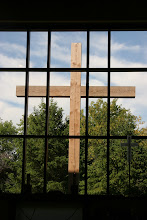
Whoever comes to me and does not hate father and mother, wife and children, brothers and sisters, yes, and even life itself, cannot be my disciple. Luke 14: 26
“The holidays” are upon us. Starting last week with Thanksgiving and continuing on through Christmas and then New Year’s Eve, we gather and celebrate with loved ones and acquaintances as we mark the important events of our faith life and of our secular life. This celebrating usually involves our families in some way.
For some of us, gathering with family is relaxing and joyful. For some of us, it can be stressful and feel like hard work. Even so, family is important. Although it may sometimes feel difficult to spend time together with family, it would be much worse to be separated, estranged.
The dictionary definition of estranged is to be removed from the customary environment or associations; to arouse mutual enmity or indifference where there had formerly been love, affection, or friendliness. The word comes from the same Latin root as strange. It would be strange to be removed from family. I can’t think of any circumstances that would make estrangement feel right.
I know people who are estranged from their families for reasons I don’t understand. How could someone give up a relationship with their parents, their husband or wife, their children, or their brothers and sisters over money, or over possessions, or over politics, or over religion?
And so, when I think about Jesus’ words in Luke’s gospel it makes me very uncomfortable that this is exactly what Jesus asks us to do. Actually, he doesn’t even ask. Jesus tells us that this is what we MUST do in order to follow him.
“Whoever comes to me and does not hate father and mother, brothers and sisters, yes, and even life itself, cannot be my disciple.” Luke 14: 26
Especially coming from the mouth of Jesus, these words sound strange. The ambassador of love, the one who once said to a rich young man that in order to have eternal life, he must keep the commandments that include honoring your father and mother and loving your neighbor as yourself, tells us here that we must hate not only our own family, but even our own life in order to follow him.
Something must have provoked Jesus to use such strong language.
Jesus had been traveling and preaching and telling parables. Along the way, huge crowds had accumulated, and were traveling with him. He wanted them to know what they were getting into. Maybe as he looked out over the masses he saw people who weren’t really committed to his cause. Maybe he saw people who were merely swept up in the movement, along for the ride, so to speak, traveling with the crowd because they wanted to see what was going to happen. Maybe he saw people who didn’t understand what he was going to do for them, that he was passionate with love for them, passionate about their salvation, and that he expected them to be passionate, too. Maybe he wanted to kindle a heavenly flame in their bellies, to startle them into action.
I searched for the commentary that said that Jesus didn’t really mean hate. I looked in my Greek books, and learned that the word had been translated correctly. Jesus really did say that we should hate our families, and even hate our own lives to follow him.
One scholar did say that the word hate was a Semitic term expressing detachment or turning away from, and was not the emotion filled word we think of if someone screams, “I hate you!” But even then, Jesus says turn away, detach yourself from what you love, and follow me.
What do we do with this? I, for one, no matter how annoyed or angry I get with them, will not turn away from my family. I’m sure most of you feel the same. But Jesus is telling us in no uncertain terms that becoming a disciple is not going to be easy. Becoming a disciple may create tensions in an already crowded life. When asked for loyalty in many different places, Jesus wants us to clearly understand that he desires and calls for primary allegiance. There is tension. We are not prepared to, probably not even able to hate the people we love. We can’t carry the cross like Jesus did. We are simply not capable of it.
Most of us can’t even get rid of our stuff.
We know the terms of discipleship, and we can’t accomplish them. And so instead of carrying the cross, we fall at the foot of it with all of our inadequacies and failures, and we remember that because of that cross, nothing is required of us.
God’s grace and mercy for our poor selves will help us hear Jesus’ strange words and remember that we can hand all of our relationships and plans and possessions to him, and that he takes care of us. What he started for us at that first family Christmas in a stable in Bethlehem, he will finish for us. Amen.
Monday, November 30, 2009

Saturday, November 21, 2009
A Prayer of Thanksgiving
O Divine Gift-Giver,
I stand beneath the endless waterfall
of your abundant gifts to me.
I thank you especially for the blessing of life,
I thank you especially for the blessing of life,
the most precious of all your gifts to me.
I thank you, Ever-generous One,
I thank you, Ever-generous One,
for clothing to wear,
for food and drink to nourish my body,
for all the talents and skills that you have bestowed upon me.
I thank you for the many joys of my life,
I thank you for the many joys of my life,
for family and friends,
for work that gives to me a sense of purpose
and invests my life with meaning.
I thank you as well
I thank you as well
for the sufferings and trials of my life,
which are also gifts
and which together with my mistakes
are among my most important teachers.
Grant that I may never greet a new day
Grant that I may never greet a new day
without the awareness of some gift
for which to give you thanks.
And may constant thanksgiving
And may constant thanksgiving
be my song of perpetual praise to you.
[Generous God], a needy one stands before you,
[Generous God], a needy one stands before you,
I that sing am that one.
Native American Omaha Indian
(from Prayers for a Planetary Pilgrim: A Personal Manual for Prayer and Ritual by Edward Hays (Forest of Peace Books, Inc. Leavenworth, KS, 1989.) p. 197-98.
Native American Omaha Indian
(from Prayers for a Planetary Pilgrim: A Personal Manual for Prayer and Ritual by Edward Hays (Forest of Peace Books, Inc. Leavenworth, KS, 1989.) p. 197-98.
Monday, November 16, 2009
I believe in God, the Father Almighty, creator of heaven and earth, I believe in Jesus Christ, God’s only Son, our Lord, who was conceived by the Holy Spirit, born of the virgin Mary, suffered under Pontius Pilate, was crucified, died, and was buried; He descended to the dead. On the third day He rose again; he ascended into heaven, he is seated at the right hand of the Father; and he will come to judge the living and the dead. I believe in the Holy Spirit; the holy catholic church; the communion of saints; the forgiveness of sins; the resurrection of the body; and the life everlasting. Amen.
If you come to church with any regularity, you will recognize the Apostles’ Creed, the confession of our Christian faith which we recite together each week during worship. The Apostles’ Creed explains and helps us to understand the Holy Trinity; the Father, the Son and the Holy Spirit.
At first glance, the Creed might seem like a simple expression of what we believe as Christians. It is anything but simple. In his little book, Living in the Kingdom; Reflections on Luther’s Catechism Alvin N. Rogness writes “It boggles the mind to say, “I believe in God the Father.” (p. 50) In the creed, we are confessing that we believe in something unbelievable – that there is a God at all, and that God is indeed our father, a personal parent, someone who knows each of us and loves us individually, unconditionally.
Martin Luther devoted ten pages of the Large Catechism (Luther’s basic teachings on the Apostles’ Creed, the Lord’s Prayer and the Ten Commandments) to the Creed. After much thought and prayer, he concluded that we should understand and study the Creed in reverse. We simply can’t believe on our own. Belief starts as a gift from the Holy Spirit.
“Because the Holy Spirit makes us believers, it stands to reason that we experience the Trinity backward – that is, only when we believe in Christ, (the work of the Holy Spirit, who does not indulge in self-revelation bit in revealing the Son) do we pierce God’s judgment and arrive at mercy.” (Martin Luther’s Catechisms; Forming the Faith Timothy J. Wengert, p. 45)
Even after witnessing Jesus perform an amazing, grace-filled miracle; the father of a young boy who Jesus healed from his convulsions cried out, “I believe! Help my unbelief!” (Mark 9:24) How much more do we, who walk by faith and not by sight, have to rely on the Spirit?
The Third Article of the Apostles' Creed Explained – from Martin Luther’s Small Catechism.
I believe in the Holy Spirit; the holy catholic church, the communion of saints; the forgiveness of sins; the resurrection of the body; and the life everlasting. Amen.
What does this mean?
I believe that I cannot by my own reason or strength believe in Jesus Christ, my Lord, or come to Him; but the Holy Ghost has called me by the Gospel, enlightened me with His gifts, sanctified and kept me in the true faith; even as He calls, gathers, enlightens, and sanctifies the whole Christian Church on earth, and keeps it with Jesus Christ in the one true faith; in which Christian Church He forgives daily and richly all sins to me and all believers, and at the last day will raise up me and all the dead, and will give to me and to all believers in Christ everlasting life.
This is most certainly true.
If you come to church with any regularity, you will recognize the Apostles’ Creed, the confession of our Christian faith which we recite together each week during worship. The Apostles’ Creed explains and helps us to understand the Holy Trinity; the Father, the Son and the Holy Spirit.
At first glance, the Creed might seem like a simple expression of what we believe as Christians. It is anything but simple. In his little book, Living in the Kingdom; Reflections on Luther’s Catechism Alvin N. Rogness writes “It boggles the mind to say, “I believe in God the Father.” (p. 50) In the creed, we are confessing that we believe in something unbelievable – that there is a God at all, and that God is indeed our father, a personal parent, someone who knows each of us and loves us individually, unconditionally.
Martin Luther devoted ten pages of the Large Catechism (Luther’s basic teachings on the Apostles’ Creed, the Lord’s Prayer and the Ten Commandments) to the Creed. After much thought and prayer, he concluded that we should understand and study the Creed in reverse. We simply can’t believe on our own. Belief starts as a gift from the Holy Spirit.
“Because the Holy Spirit makes us believers, it stands to reason that we experience the Trinity backward – that is, only when we believe in Christ, (the work of the Holy Spirit, who does not indulge in self-revelation bit in revealing the Son) do we pierce God’s judgment and arrive at mercy.” (Martin Luther’s Catechisms; Forming the Faith Timothy J. Wengert, p. 45)
Even after witnessing Jesus perform an amazing, grace-filled miracle; the father of a young boy who Jesus healed from his convulsions cried out, “I believe! Help my unbelief!” (Mark 9:24) How much more do we, who walk by faith and not by sight, have to rely on the Spirit?
The Third Article of the Apostles' Creed Explained – from Martin Luther’s Small Catechism.
I believe in the Holy Spirit; the holy catholic church, the communion of saints; the forgiveness of sins; the resurrection of the body; and the life everlasting. Amen.
What does this mean?
I believe that I cannot by my own reason or strength believe in Jesus Christ, my Lord, or come to Him; but the Holy Ghost has called me by the Gospel, enlightened me with His gifts, sanctified and kept me in the true faith; even as He calls, gathers, enlightens, and sanctifies the whole Christian Church on earth, and keeps it with Jesus Christ in the one true faith; in which Christian Church He forgives daily and richly all sins to me and all believers, and at the last day will raise up me and all the dead, and will give to me and to all believers in Christ everlasting life.
This is most certainly true.
Monday, November 9, 2009
King David knew how to wait. Do we?
Map of David’s Kingdom
So all the elders of Israel came to the king at Hebron; and King David made a covenant with them at Hebron before the Lord, and they anointed David king over Israel. David was thirty years old when he began to reign and he reigned forty years. (2 Samuel 5: 3-4)
By the time he became king over all of Israel, David had been anointed as king three times. First, the prophet Samuel anointed David when he was still a child. The only witnesses, besides God and Samuel, were David’s brothers. (1 Sam 16: 13) The second anointing was by the people of Judah, the southern part of ancient Palestine (2 Sam 2: 4). Only the people of Judah acknowledged David as king. The rest of Israel wasn’t yet united. When David was about 37, he was finally anointed king of all Israel.
David had to wait a long time to become the king that God chose him to be as a child. In his commentary on 1 and 2 Samuel, Eugene Peterson writes, “David knows how to wait. His waiting is not procrastination; it is not indolence. It is poised submissiveness, a not-doing that leaves adequate space and time for God’s initiating actions through others.” (p. 156-57)
Waiting is never easy. We want things to happen now, and we want them the way we want them. Sometimes, even though we hear it again and again, it’s hard to remember that God’s time is different from our time. Sometimes the waiting - the time before something happens - is the time that God gives us to get prepared, to become educated, to grow mature enough to handle the experiences that come our way.
Do you know how to wait? Do you leave adequate space and time for God to work through you and through other people in your life? God has great plans. You might not see what they are right now, but remember that God is working through you even as you wait. God invites you be patient, to learn and grow, and to anticipate what is to come.
So all the elders of Israel came to the king at Hebron; and King David made a covenant with them at Hebron before the Lord, and they anointed David king over Israel. David was thirty years old when he began to reign and he reigned forty years. (2 Samuel 5: 3-4)
By the time he became king over all of Israel, David had been anointed as king three times. First, the prophet Samuel anointed David when he was still a child. The only witnesses, besides God and Samuel, were David’s brothers. (1 Sam 16: 13) The second anointing was by the people of Judah, the southern part of ancient Palestine (2 Sam 2: 4). Only the people of Judah acknowledged David as king. The rest of Israel wasn’t yet united. When David was about 37, he was finally anointed king of all Israel.
David had to wait a long time to become the king that God chose him to be as a child. In his commentary on 1 and 2 Samuel, Eugene Peterson writes, “David knows how to wait. His waiting is not procrastination; it is not indolence. It is poised submissiveness, a not-doing that leaves adequate space and time for God’s initiating actions through others.” (p. 156-57)
Waiting is never easy. We want things to happen now, and we want them the way we want them. Sometimes, even though we hear it again and again, it’s hard to remember that God’s time is different from our time. Sometimes the waiting - the time before something happens - is the time that God gives us to get prepared, to become educated, to grow mature enough to handle the experiences that come our way.
Do you know how to wait? Do you leave adequate space and time for God to work through you and through other people in your life? God has great plans. You might not see what they are right now, but remember that God is working through you even as you wait. God invites you be patient, to learn and grow, and to anticipate what is to come.
Monday, November 2, 2009
This past Sunday at Trinity, almost fifty new members were welcomed into our congregation. I ask you to keep our new members, and our congregation in your prayers. Together in faith, we will continue the tradition started with a dream more than 90 years ago. We have things to do! Baptizing, worshiping, sharing the sacrament of holy communion and so many other important meals, raising new saints and caring for each other and for the world, and sending saints into eternity - how could we do all these things alone?
We know that even as saints, we aren’t perfect. We struggle and we stumble, we fall short, we disagree and sometimes we even fight. But it is in our imperfections that we bear witness to the abundant love of God in Jesus, who washes us clean, and receives us only by grace. It is God who knits us together in this one holy church which is the body of Christ.
My prayer for myself, and for each of you, for our congregation and for the whole church, is that, together with all the saints, we share our time and our talents and our treasure, and we to continue to make a difference for each other and for the world. I pray that we continue to live a resurrection life during our time here on earth, even as we look toward heaven. We are all part of something greater than ourselves, “part of the unending ribbon of God’s children, walking wet from baptism to eternity, walking by faith and not by our own meager efforts.”
We know that even as saints, we aren’t perfect. We struggle and we stumble, we fall short, we disagree and sometimes we even fight. But it is in our imperfections that we bear witness to the abundant love of God in Jesus, who washes us clean, and receives us only by grace. It is God who knits us together in this one holy church which is the body of Christ.
My prayer for myself, and for each of you, for our congregation and for the whole church, is that, together with all the saints, we share our time and our talents and our treasure, and we to continue to make a difference for each other and for the world. I pray that we continue to live a resurrection life during our time here on earth, even as we look toward heaven. We are all part of something greater than ourselves, “part of the unending ribbon of God’s children, walking wet from baptism to eternity, walking by faith and not by our own meager efforts.”
Monday, October 26, 2009
I know, O Lord, that the way of human beings is not in their control, that mortals as they walk cannot direct their steps. Correct me, O Lord, but in just measure; not in your anger, or you will bring me to nothing. (Jeremiah 10: 23-24)
Sometimes it feels like things are falling apart around me and I don’t have control over anything. Living in a house with 3 other adults and 2 dogs, life often feels messy and hectic and chaotic. Three blocks west of my house, noise from the famous I-35W/Hwy 62 Crosstown reconstruction project, which began in June of 2007 and is scheduled to be completed in December of 2010, is constant and traffic is jammed on 35W even when I come home on Sunday afternoon or Wednesday night at 8:00.
The uncertain economy, terrorism and war, global warming, it’s no wonder I wake up at night in a cold sweat. All is not right with the world, and apparently there is nothing I can do about it!
Yesterday was Reformation Day in the Lutheran Church. We celebrated our Lutheran “birthday” and our realization, thanks to Martin Luther, that God is in control and we are not. Dick Rice, our visiting preacher and director of spiritual care at The Retreat in Wayzata, spoke about our human need to be in control. He called our desire to change things that we cannot change pride and arrogance. Who are we, he asked, that we think we can do work that belongs to God?
When we finally realize most things in this world are not in our control, only then can we rest in the love and grace of God in Jesus Christ. As everything around us changes, even as it falls apart, we can remember that it is only God who never changes. God is the solid ground upon which we stand. Then our hearts and minds can find peace in this chaotic world. God has something great planned for us in this life, but that is not all there is. God has something even greater planned for us – something beyond this life, beyond this messy world.
Following her divorce from Lance Armstrong, Kristin Armstrong turned to God for courage and strength. Her daily devotional has been helpful to several of my friends, and although I haven’t personally experienced the pain of divorce, I have found many of her reflections comforting.
She writes, “Jesus is the same yesterday, today and forever. (Heb 13:8) He is our Rock. He is in the boat with us, calm and steady despite the turbulent seas. We can look forward to the future with unwavering confidence when we approach it from solid ground. We don’t need to fear change when we know it cannot disturb the peace at our core. If the circumstances surrounding us are unsteady, we cannot waste our energy attempting to control them. But we can focus on our efforts inside, allowing Christ to change and fortify us. We can work on our core, on our own personal steadiness. Perhaps we can’t change where we are, but we can change how we respond while we are here. (p. 285, Happily Ever After, Armstrong, 2007)
Monday, October 19, 2009
Is faith blind?
For now we see in a mirror, dimly, but then we will see face to face. Now I know only in part, then I will know fully, even as I have been fully known. (1 Corinthians 13:12)
I recently had a conversation with a friend following a presentation by a Martin Luther scholar. The discussion centered on the subjects of grace and faith. One of the things we talked about was doubt, and how doubt relates to our faith. “So, we’re just supposed to have blind faith?” my friend asked, “Is that what God expects?”
There is so much about our faith of which we cannot be absolutely sure, and so in some things we must have blind faith. We must trust God wholly and completely in all that we do and in all that we are. But I also believe that doubts and questions are an integral part of our faith. We can’t know the mind of God.
The NRSV translation of 1 Cor. 13:12 is positively poetic. “For now we see in a mirror dimly.” Now we can’t see clearly what God has in store for us. The Greek word that is translated “dimly,” is actually “in a riddle.” Now we can only see in a riddle, but then, the riddle will be solved for us, we will know everything.
In John Irving’s wonderful book A Prayer for Owen Meany, the young narrator John Wheelwright compares the pastors of the two churches in his small Canadian town. One believed absolutely, and was “blind to doubt or worry in any form.” What made the other “infinitely more attractive was that he was full of doubt; he expressed our doubts in the most eloquent and sympathetic ways…” The gift of having faith, he said, was that it was necessary to believe in God without any great or even remotely reassuring evidence that we don’t inhabit a godless universe. I agree.
Dear God, Help our unbelief. Help us to know that, in wondrous time when we will see you face to face, all things will be perfectly clear. Amen.
I recently had a conversation with a friend following a presentation by a Martin Luther scholar. The discussion centered on the subjects of grace and faith. One of the things we talked about was doubt, and how doubt relates to our faith. “So, we’re just supposed to have blind faith?” my friend asked, “Is that what God expects?”
There is so much about our faith of which we cannot be absolutely sure, and so in some things we must have blind faith. We must trust God wholly and completely in all that we do and in all that we are. But I also believe that doubts and questions are an integral part of our faith. We can’t know the mind of God.
The NRSV translation of 1 Cor. 13:12 is positively poetic. “For now we see in a mirror dimly.” Now we can’t see clearly what God has in store for us. The Greek word that is translated “dimly,” is actually “in a riddle.” Now we can only see in a riddle, but then, the riddle will be solved for us, we will know everything.
In John Irving’s wonderful book A Prayer for Owen Meany, the young narrator John Wheelwright compares the pastors of the two churches in his small Canadian town. One believed absolutely, and was “blind to doubt or worry in any form.” What made the other “infinitely more attractive was that he was full of doubt; he expressed our doubts in the most eloquent and sympathetic ways…” The gift of having faith, he said, was that it was necessary to believe in God without any great or even remotely reassuring evidence that we don’t inhabit a godless universe. I agree.
Dear God, Help our unbelief. Help us to know that, in wondrous time when we will see you face to face, all things will be perfectly clear. Amen.
Subscribe to:
Posts (Atom)