Monday, May 10, 2010

What If God Was One Of Us?

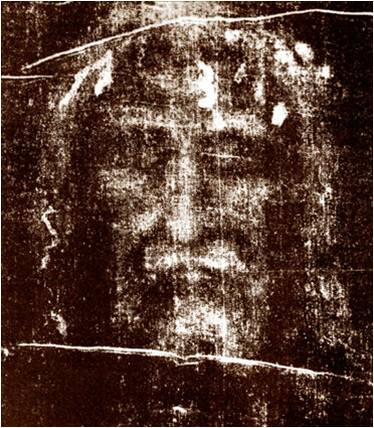
Close your eyes for a minute and picture the face of Jesus.

I bet I know what he looks like to you. It’s probably the same image that comes to my mind. There are no pictures of the real face of Jesus. Legend tells us that Luke may have been an artist, and that he may have drawn a picture of Jesus but nobody has ever found anything to prove that. Even though we think we know what Jesus looked like, the truth is that we really have no idea.

And why do we even want to know?

In her song “What if God Was One of Us,” Alanis Morissette imagines, “What if God was one of us, just a slob like one of us, just a stranger on the bus, trying to make his way home…”

It is in the incarnation, God’s word, Jesus, who was made flesh and who lived among us, that the words to this song are true. In the person of Jesus, God was one of us.

God came to earth and for a short time, joined the human race. He was born, he was a member of a family, and he had a job. He had to eat and sleep, and pray and travel. He was scared and happy and angry. He loved his friends. He was truly human, and so we believe that he was just like us, just a slob like one of us, just a stranger on the bus…

There was just one difference – Jesus was also truly divine. At Christmas time, we hear Jesus called Emmanuel, a word which means “God with us.” Jesus was one of us, and while he was here, the people that he met were face to face with God.

So what did they see? Our image of Jesus, and the image of Jesus for each person in the world who believes in him, is the image that helps each of us to relate to and to form a connection with this part of the Holy Trinity, that is, God with us.

A few years ago, some British scientists, assisted by Israeli archeologists, used forensic anthropology to create a model of what Jesus might have really looked like. Words from Matthew’s gospel offer a clue to the fact that Jesus wasn’t a tall, light skinned, blue eyed western looking man. He looked like the rest of his disciples. We know this, because in order for the soldiers to arrest Jesus in the Garden of Gethsemane before the crucifixion, Jesus had to be indentified by Judas. Jesus looked like everyone else, a typical Galilean Semite.

For me, and maybe for you, it doesn’t really matter what Jesus looked like. When we imagine Jesus sitting next to us, when we share our worries and our sorrows and our successes and our joys with him in our prayers, Jesus looks like each one of us. He was here, on this earth, for each one of us, and he died for each one of us, and because he rose from the dead, each one of us will have eternal life.

In Japan,

In Africa, or as an African American,
in the Caribbean,

At Mount Sinai,


In Turin, Italy.

God is one of us, Holy Trinity, three in one. In the name of the Father, and of the Son and of the Holy Spirit, Amen.

Monday, May 3, 2010

Something to think and pray about this week

In the northern hemisphere, May brings the special joy of brighter sunlight and longer days. Throughout the scriptures God is spoken of as the source of light, living in inaccessible light. Jesus is the light of the world, bringing sight to the sightless. We are to walk as children of the light. Light is more than just a condition to see by. Sunlight opens the world to us, nourishes our skin and our body, shows us we are still alive. Dylan Thomas' angry poem bids his sick father, ‘Rage, rage against the dying of the light'.
Lord, I treasure your light, and the feeling of the sun on my back. May I never lose my gratitude for the sight of my eyes and the glory of sunlight. I need your light too in the dark hours, when I am baffled by the evil of the world. Be you the light of my life.

borrowed from http://sacredspace.ie/
click on the link to continue the prayer

Monday, April 26, 2010

Where is God in the storm?

I listened to the news coverage of the tornados in Mississippi this past week with an especially broken heart. Five years ago I travelled for twenty four hours in a bus with a group from Mount Olivet to lead a Camp Noah week in McComb Mississippi, about 150 miles south of Yazoo City. The participants of our camp were refugees from the Hurricane Katrina ravaged areas of New Orleans. We spent the week talking about the hurricane and the broken levees and the flood and how God cares for us through the storm.

Our group devotions for that week came from a book by Dr. Gary Harbauch called “Act of God - Active God: Recovering from Natural Disasters.” In the introduction, Gilbert B. Furst, director of Lutheran Disaster Response writes,
”Instead of seeing disasters as 'acts of God,' Harbaugh shows that when disasters occur, God in fact is active: in and through our questions, confusion and doubts; active in and through our responses and actions; active in and through people of faith.” p.ix.

It is our faith that sustains us when everything is falling apart around us. In a CBS "Early Show" interview, the faith of the decimated community shines through.

“Ashley Saxton, who was driving to her family's restaurant with her husband Rob as the tornado approached, said the storm came upon them very fast.

‘It's a miracle we're here," Ashley told ‘The Early Show’. Rob Saxton said the tornado was powerful enough to lift up their car and briefly send his wife airborne. ‘I had to snatch her.’

Sunday was sunny and breezy as Thrasher and about three dozen members the Yazoo City church stood in a circle and sang ‘Till the Storm Passes By.’ Thrasher reminded the group that the church has survived tough times before. They rebuilt after their building was destroyed by arson about 10 years ago.

‘The Lord brought us through the fire, and brought us back bigger and better,’ Thrasher said. ‘The Lord will bring us back bigger and better this time, if we stick together.’”

Harbaugh writes, “Through the eyes of faith, we see Christ present and caring for us in times of disaster, making it possible for us to ‘comprehend’ with the heart of not with the mind. The word translated in Ephesians 3 as ‘comprehend’ also means ‘perceive.’ Especially when disaster darkens our vision, we pray that God will strengthen us in the inner person and give us power to perceive the presence and care of Christ.” p. 21. “The light never shines so brightly as when it appears in utter darkness. There is no way to experience the joy of the resurrection except by way of the cross.” p. 17

Till The Storm Passes by Mosie Lister.

In the dark of the midnight have I oft hid my face while the storm howls above me and there’s no hiding place mid the crash of the thunder precious Lord hear my cry keep me safe til the storm passes by.

Chorus: Till the storm passes over till the thunder sounds no more till the clouds roll forever from the sky hold me fast let me stand in the hollow of thy hand keep me safe till the storm passes by.

When the long night has ended and the storms come no more let me stand in thy presence on that bright peaceful shore in that land where the tempest never comes Lord may I dwell with thee till the storm passes by.

Chorus: Till the storm passes over till the thunder sounds no more till the clouds roll forever from the sky hold me fast let me stand in the hollow of thy hand keep me safe till the storm passes by.

Many times Satan tells me there’s is no need to try for there is no end of sorrow there’s no hope by and by but I no thou art with me and tomorrow I’ll rise where the storms never darken the skies

Chorus: Till the storm passes over till the thunder sounds no more till the clouds roll forever from the sky hold me fast let me stand in the hollow of thy hand keep me safe till the storm passes by.

Monday, April 19, 2010

The Hound of Heaven

by Francis Thompson

I fled Him down the nights and down the days
I fled Him down the arches of the years
I fled Him down the labyrinthine ways
Of my own mind, and in the midst of tears
I hid from him, and under running laughter.
Up vistaed hopes I sped and shot precipitated
Adown titanic glooms of chasme d hears
From those strong feet that followed, followed after
But with unhurrying chase and unperturbe d pace,
Deliberate speed, majestic instancy,
They beat, and a Voice beat,
More instant than the feet:
All things betray thee who betrayest me.

I pleaded, outlaw--wise by many a hearted casement,
curtained red, trellised with inter-twining charities,
For though I knew His love who followe d,
Yet was I sore adread, lest having Him,
I should have nought beside.
But if one little casement parted wide,
The gust of his approach would clash it to.
Fear wist not to evade as Love wist to pursue.
Across the margent of the world I fled,
And troubled the gold gateways of the stars,
Smiting for shelter on their clange d bars,
Fretted to dulcet jars and silvern chatter
The pale ports of the moon.

I said to Dawn --- be sudden, to Eve --- be soon,
With thy young skiey blossoms heap me over
From this tremendous Lover.
Float thy vague veil about me lest He see.
I tempted all His servitors but to find
My own betrayal in their constancy,
In faith to Him, their fickleness to me,
Their traitorous trueness and their loyal deceit.

To all swift things for swiftness did I sue,
Clung to the whistling mane of every wind,
But whether they swept, smoothly fleet,
The long savannahs of the blue,
Or whether, thunder-driven,
They clanged His chariot thwart a heaven,
Plashy with flying lightnings round the spurn of their feet,
Fear wist not to evade as Love wist to pursue.
Still with unhurrying chase and unperturbed pace
Deliberate speed, majestic instancy,
Came on the following feet, and a Voice above their beat:
Nought shelters thee who wilt not shelter Me.

I sought no more that after which I strayed
In face of Man or Maid.
But still within the little childrens' eyes
Seems something, something that replies,
They at least are for me, surely for me.
But just as their young eyes grew sudden fair,
With dawning answers there,
Their angel plucked them from me by the hair.
Come then, ye other children, Nature's
Share with me, said I, your delicate fellowship.
Let me greet you lip to lip,
Let me twine with you caresses,
Wantoning with our Lady Mother's vagrant tresses,
Banqueting with her in her wind walled palace,
Underneath her azured dai:s,
Quaffing, as your taintless way is,
From a chalice, lucent weeping out of the dayspring.

So it was done.
I in their delicate fellowship was one.
Drew the bolt of Nature's secrecies,
I knew all the swift importings on the wilful face of skies,
I knew how the clouds arise,
Spume d of the wild sea-snortings.
All that's born or dies,
Rose and drooped with,
Made them shapers of mine own moods, or wailful, or Divine.
With them joyed and was bereaven.
I was heavy with the Even,
when she lit her glimmering tapers round the day's dead sanctities.
I laughed in the morning's eyes.
I triumphed and I saddened with all weather,
Heaven and I wept together,
and its sweet tears were salt with mortal mine.
Against the red throb of its sunset heart,
I laid my own to beat
And share commingling heat.

But not by that, by that was eased my human smart.
In vain my tears were wet on Heaven's grey cheek.
For ah! we know what each other says,
these things and I; In sound I speak,
Their sound is but their stir, they speak by silences.
Nature, poor step-dame, cannot slake my drouth.
Let her, if she would owe me
Drop yon blue-bosomed veil of sky
And show me the breasts o' her tenderness.
Never did any milk of hers once bless my thirsting mouth.
Nigh and nigh draws the chase, with unperturbe d pace
Deliberate speed, majestic instancy,
And past those noise d feet, a Voice comes yet more fleet:
Lo, nought contentst thee who content'st nought Me.

Naked, I wait thy Love's uplifted stroke. My harness, piece by piece,
thou'st hewn from me
And smitten me to my knee,
I am defenceless, utterly.
I slept methinks, and awoke.
And slowly gazing, find me stripped in sleep.
In the rash lustihead of my young powers,
I shook the pillaring hours,
and pulled my life upon me.
Grimed with smears,
I stand amidst the dust o' the mounded years--
My mangled youth lies dead beneath the heap.
My days have crackled and gone up in smoke,
Have puffed and burst like sunstarts on a stream.
Yeah, faileth now even dream the dreamer
and the lute, the lutanist.

Even the linked fantasies in whose blossomy twist,
I swung the Earth, a trinket at my wrist,
Have yielded, cords of all too weak account,
For Earth, with heavy grief so overplussed.
Ah! is thy Love indeed a weed,
albeit an Amaranthine weed,
Suffering no flowers except its own to mount?
Ah! must, Designer Infinite,
Ah! must thou char the wood 'ere thou canst limn with it ?
My freshness spent its wavering shower i' the dust.
And now my heart is as a broken fount,
Wherein tear-drippings stagnate, spilt down ever
From the dank thoughts that shiver upon the sighful branches of my
mind.

Such is. What is to be ?
The pulp so bitter, how shall taste the rind ?
I dimly guess what Time in mists confounds,
Yet ever and anon, a trumpet sounds
From the hid battlements of Eternity.
Those shaken mists a space unsettle,
Then round the half-glimpse d turrets, slowly wash again.
But not 'ere Him who summoneth
I first have seen, enwound
With glooming robes purpureal; Cypress crowned.
His name I know, and what his trumpet saith.
Whether Man's Heart or Life it be that yield thee harvest,
Must thy harvest fields be dunged with rotten death ?

Now of that long pursuit,
Comes at hand the bruit.
That Voice is round me like a bursting Sea:
And is thy Earth so marred,
Shattered in shard on shard?
Lo, all things fly thee, for thou fliest me.
Strange, piteous, futile thing;
Wherefore should any set thee love apart?
Seeing none but I makes much of Naught (He said).
And human love needs human meriting ---
How hast thou merited,
Of all Man's clotted clay, the dingiest clot.
Alack! Thou knowest not
How little worthy of any love thou art.
Whom wilt thou find to love ignoble thee,
Save me, save only me?
All which I took from thee, I did'st but take,
Not for thy harms,
But just that thou might'st seek it in my arms.

All which thy childs mistake fancies as lost,
I have stored for thee at Home.
Rise, clasp my hand, and come.
Halts by me that Footfall.
Is my gloom, after all,
Shade of His hand, outstretched caressingly?
Ah, Fondest, Blindest, Weakest,
I am He whom thou seekest.
Thou dravest Love from thee who dravest Me.

Monday, April 12, 2010

What do you know?

Now every year Jesus’ parents went to Jerusalem for the festival of the Passover. And when he was twelve years old, they went up as usual for the festival. When the festival was ended and they started to return, the boy Jesus stayed behind in Jerusalem, but his parents did not know it. Assuming that he was in the group of travelers, they went a day’s journey. Then they started to look for him among their relatives and friends. When they did not find him, they returned to Jerusalem to search for him. After three days they found him in the temple, sitting among the teachers, listening to them and asking them questions. And all who heard him were amazed at his understanding and his answers. (Luke 2: 41-47)

I am the parent of two grown children. My son just turned 20, and this year, my daughter will graduate from high school. As we look back on our parenting years, we hope that we did a good enough job raising these young people to be responsible, productive adults. There are so many things they need to know as they venture out into the world, and there are so many times when we’ve felt unprepared or simply unable to teach them about everything that will come their way. I hope as their parents, we recognized, as we tried to guide them through childhood, that our children have their own wisdom, their own way of looking at things that may be different from the way we see things, maybe even that they have something to teach us!

This week, an article called “Learning from Children,” in the May 2010 issue of Lutheran Woman Today, affirmed my hopes. According to the author, Herbert Anderson, “The story of Jesus in the temple reminds us that we cannot know the fullness of being human without listening to children and understanding what they see.” Anderson suggests that when our primary, our only focus as parents is teaching, nurturing and protecting our children, we miss the opportunity to learn from them. They have stuff to teach us!

Anderson observes, “The biblical story parallels the human story of childhood, adulthood, and parental care of children. Because of Jesus, childness is not foreign to God. The picture of Jesus welcoming children is a radically new and more inclusive vision of the human community. Adults are invited to learn from children about being human and about being a disciple of Jesus.”

I invite you, with the children who are around you, to be intentional about how you listen to them. You might be amazed!

Monday, April 5, 2010

Hungry?

This year, for the first time, I practiced the discipline of a Lenten fast. Starting on Ash Wednesday, and ending on Good Friday with a salty, doughy cross shaped pretzel, a product of Trinity’s Good Friday cross crafts, I gave up eating bread and pasta. These foods were staples of my diet, not only because of their convenience, but because they’re yummy. I have an Italian recipe book called “The Top 100 Pasta Sauces.” My family enjoys dinner from that book at least once a week.

I thought my Lenten fast would be difficult to maintain. I thought that I would never be satisfied following a meal minus the carbs.

In an article called “A Christian Diet,” (From The Christian Century, April 6, 2010, p. 35) David Grumett recalls a sermon by John Wesley. “Wesley lists various grounds for fasting: a natural sense of affliction, sorrow or penitence, the limitation of sensual appetites, self chastisement and the aiding of prayer. He does not present these grounds as necessary reasons to fast, but as reasons why Christians choose to fast.”

My fast surprised me in a few different ways. I was indeed more mindful of what I ate at every meal. I ate less food in general, not really missing the bread with dinner, skipping the pasta that came with an order of scallops at a restaurant. I was indeed satisfied after a meal that filled me up just so I was not hungry. I never once during Lent had a stomachache after eating more than I should have.

What I was missing was the connection. I wish I would have read Grumett’s article before Ash Wednesday. I think I would have been more mindful of why I was doing what I was doing. The discipline part of it did not really connect with the faith part of it for me, at least this time. Grumett writes, “By fasting during Advent and Lent, one experiences an absence that enables one to long physically for Christ’s incarnation and resurrection… The key point is to use our food practices for the good of our community and to develop our connection with God.” (p. 36)

I think I am going to continue with my discipline of fasting. I have resolved to be more aware of what and of how much I am eating, where it comes from and who has prepared it. I will continue to read ingredient labels to avoid high fructose corn syrup. And the fresh fruits and vegetables that have become staples will continue as staples – I am looking forward to summer’s abundance of local produce!

Grumett writes, “We may use food as a means of reconnecting to our spiritual heritage and traditions and marking the Christian calendar and the seasonal calendar – which itself is God-given.” (p. 37)

I pray that my continued discipline and mindfulness of the faith-food connection will help me to “[recognize] the link between food and spirituality, and [subject] eating to the scrutiny of Christian conscience and tradition.” (p. 37) I challenge you to be mindful, too.

Monday, March 22, 2010

Turn! Turn! Turn!

This weekend I read a passage from the book of Ecclesiastes at a funeral. It’s a familiar passage. Most of you can probably sing it in the song made popular by the Byrds. But even the well-known words of Ecclesiastes 3 are the living Word of God, so I wasn’t surprised when someone asked me after the funeral, about some of the “times” that the teacher Ecclesiastes writes about – a time to kill, a time to hate - words of God he found troubling.

In a message on Chicago Sunday Evening Club, Sr, Joan Chittister makes some thoughtful comments on the third chapter of Ecclesiastes. She writes, “The purpose of time is to alert us to ourselves so that we can become… with its affirmation of all the dimensions of life, the only thing it’s really worth our time to be: a total human, a deeply spiritual being.

That's the call of Ecclesiastes. It's an awesome thought. If God is in this particular life struggle, and this life struggle, this painful separation, this shocking loss, this deep deep pain, this change of status, of life, of love, has something to do with the development of the God-life in me, then it is to be dealt with reverently and lived through trustingly. Then raging will cease. Then the despair will dissolve. Then the bitterness can ebb. It is not Ecclesiastes implies that God is in this awful thing treating us like mice in cages and tweaking our tails with glee. No, it is that we are living in God, no matter what life is like for us at this particular moment. So, then, what can possibly be taken away that will leave us bereft, once we decide to live in the presence of God?

Young widows know life's sting. Old inventors know its zest. Middle aged women know its allure. Young couples know its excitement. Middle aged men know its false promise. Children know its partiality - that many thrive some of the time, and that some struggle ceaselessly. But through it all, whatever its twists and turns along the way, life leaves us images of the serene elderly, the ones who fought the fight and found it energizing, found it good. They are proof for the rest of us that if we do not resist it, if we dance the dance of life whole and entire, we, too, may come to the end of it weathered and strong, wizened and laughing, quietly satisfied with what we have learned, for what we have become that we could not have been without our own particular recipe of cleansing pain and perfect joy in proper proportions. There is no such thing as a meaningless moment. Life is a growing thing going from seed to sapling, but always, always toward its purpose, the shaping of the self into a person of quality, compassion and joy. But for that to happen every smaller segment must be faced and cannot be fled.

Indeed, Ecclesiastes weighs them all. He teaches there is a time to kill whatever it is within us that keeps our souls from flying free. There is a time, he says, to refrain from embracing whatever it is that is smothering the heart. There is a time to weep the tears that dignify the going of those things and people in life who have brought us to where we are today. There is a time to embrace the good of life with great thumping hugs that give energy for the rest of the journey. There is a time to reap, to work hard, to achieve and assure the fruits of life. There is a time to glory in the gains of life, to run through life head up and lusty, gathering as we go, piling up the good things and laughing as we do. There is a time to love, to find ourselves in someone else, so that we can find ourselves at all. There is a time to lose, a time to let go of whatever has become our captor in life. There is a time to be born, fresh and full again out of old ideas, old forms, old shapes. There is a time to laugh, to let go of the propriety and old pomposities and join the bungling, lunging, silly human race. There is a time to die, to put an end to things, to stop the carousel, to surrender to the forces of time and trust them. There is a time of war, of struggling against the forces within me that make for my destruction. There is a time to heal ourselves from the hurts that weigh us down and keep us from taking charge of our own emotional lives. There is a time to build up, to construct the new world, to co-create the globe, so that what we leave behind is better than what we have received. Finally, there is a time for peace, for coming to grips with the demons within us, for staring them down and smoothing them out, so that we can spread peace like velvet.

Article exerpted from: 30 Good Minutes Message by Joan Chittister "Time: The Great Spiritual Director" Program #4019 First air date February 16, 1997