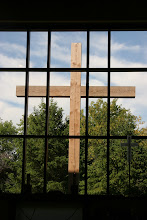
O Lord, our Sovereign, how majestic is your name in all the earth! You have set your glory above the heavens. Out of the mouths of babes and infants you have founded a bulwark because of your foes, to silence the enemy and the avenger. When I look at your heavens, the work of your fingers, the moon and the stars that you have established;what are human beings that you are mindful of them, mortals that you care for them? Yet you have made them a little lower than God, and crowned them with glory and honor. You have given them dominion over the works of your hands; you have put all things under their feet, all sheep and oxen, and also the beasts of the field, the birds of the air, and the fish of the sea, whatever passes along the paths of the seas. O Lord, our Sovereign, how majestic is your name in all the earth!
Psalm 8
I’ve always lived in a house shaded by huge trees. The house I bought with my husband when we were first married was nestled between tall oak trees. They provided wonderful shade which kept our house cool on hot summer days. They also provided lots of food for the legions of squirrels that made our corner lot their home.
About every four or five years, the entire contents of the acorn crop for that year would fall from the trees in about 1 week, and the noise from those falling nuts was like hail, pouring down 24 hours a day.
In the autumn, we spent hours raking and playing in the leaves with our two children, who were very small in those years.
It was a lot of work to maintain a grassy yard under those oak trees, but we managed to have a decent lawn with the help of grass seed developed to grow in the shade. My gardens contained day lilies, hosta, impatiens and begonias, all plants that thrive with very little sunlight.
About 8 years ago, when it was clear that my family had grown out of our little starter house, we bought a larger house on a larger lot, with larger trees. This time, we were “blessed” with two 70 year old silver maples, one in the front yard and one in the back. These trees also provided cool shade, a home for all of the squirrels in the neighborhood, and many, many leaves to rake in the fall. But we soon discovered that silver maples have a life expectancy of about 70 years. Branches would fall to the ground with each gust of wind, and the squirrels had hollowed out a huge nest in a section of trunk that hung directly over our den. The trees had to be removed.
Except for the great expense to have them taken down, I was thrilled to get rid of those trees. They were messy, and I was looking forward to a yard filled with sunshine. I wanted to grow flowers that didn’t love shade, and I wanted vegetables. In my own yard, I could now plant and grow whatever pleased me.
That spring, I cleared out the garden full of day lilies next to the garage, and I planted a salsa garden. Eight tomato plants and four pepper plants didn’t seem excessive at the end of May. They were so tiny, and I wanted to have a good crop.
If you do any gardening, you can imagine what happened. I spent many sunny afternoons trimming branches and clipping buds from a garden that went wild. The plants were actually choking each other out, and I had to tend carefully to the garden, thinning and trimming the excessive over planting that I did in the spring. I worried that I wouldn’t have any vegetables at all! My enthusiasm for a bountiful crop, and yes, my greed, might have eventually caused my garden to die.
The psalmist reminds us of the great gift that God has created for us. Praising God, he writes, “When I look at your heavens, the work of your fingers, the moon and the stars that you have established, what are human beings that you are mindful of them, mortals that you care for them?” The psalmist then reminds us not only of the power we have been given over creation, but of the responsibility that comes with that power. “You have given human beings dominion over the works of your hands, you have put all things under their feet.”
In creation, God has given us a great gift. We can do with it whatever pleases us, and we do. We live in a culture of excess. Yesterday I filled up the gas tank on the big red truck that belongs to my husband, and the bill came to almost 50 dollars. With our Costco membership we can buy our crackers in 3 pound boxes. The honey bees are disappearing, possibly because of the millions of invisible cell phone signals that are disturbing their natural radar which helps them find their way back to their hives.
We have dominion over the work of Gods hands, but I think we might misunderstand what dominion means.
In Psalm 8, the word dominion conveys a concept of partnership between God and God’s creation. In her book Gaia and God, feminist theologian Rosemary Radford Ruether reminds us that “nature is not private property to be done with as one wishes, but stewardship over an earth that is God’s.” Those of us who live in the light of God’s grace must be aware of that, and remember that safe in our relationship with God, we are given the privilege and responsibility to be partners with God in care for, love for and intimate relationship with the natural world.
Just because we know how to, and because we can, does not mean that we should. We need to downsize instead of supersize. We should use more public transportation. We should stop buying bottled water. Studies have shown that most tap water is just as good for you, if not better, and the cost to our environment to produce and dispose of all the plastic is staggering.
In 2005, the UN Millennium Ecosystem Assessment discovered that the global food production and distribution system is the main cause of pollution and the greatest destroyer of ecosystems and biodiversity. It’s not industry or oil, as we usually think, but the global food industry. Agriculture poisons and makes the soil infertile, monoculture crops involve increasingly invasive hybrid strains, aquifers get polluted. Unsustainable amounts of water are needed for irrigation, crazy logic sees staple foods transported for thousands of miles, fish stocks are plundered, farms are places where animal lives are just cogs in an assembly line.
We have learned that small everyday acts like changing the type of light bulbs we use, can help our environment. Just think what effect our food choices could have: we really could make a decisive difference. The rules are simple: buy products which are local, fresh, in season and organic; get information by reading the label and, even more important, by getting to know producers; cook for yourself, avoiding precooked and preserved foods; practice healthy restraint, preferring quality over quantity and refocusing our attention on the importance of food. While gaining benefits and respect from virtuous behavior, it won’t be a sacrifice but a pleasure.
Come to my house this summer and I will get you started with fresh ingredients for salsa.
We are blessed with a wonderful world. Our ability to manipulate our environment, to harness and exploit the power of our natural resources is not proof of God’s blessing on our nation. It is evidence that we tend to rely on ourselves, and forget that the primary actor in Psalm 8, and in the world, is not human, but God.
We have been given dominion over the work of God’s hands, and with that empowerment comes responsibility. Dominion thought of in terms of our precious relationship with God and with nature brings with it the responsibility to value the interdependence of God, all creatures, and creation as well as the responsibility to care for the earth as we have been cared for and loved by a God of limitless love.
Amen.
Monday, March 15, 2010

Monday, March 8, 2010
“How old are you?”
For reasons I do not understand, most women and some men don’t like to be asked this question. I’ll never forget the time, while visiting with a very elderly member of my former congregation, what happened when I asked her, out of curiosity I suppose, but also with a sense of awe at her long history, how old she was. She was not amused, and she snapped back that I should never ask a lady her age. Lesson learned. I am very careful about this now.
I don’t mind when people ask about my age. Every year of my life has brought challenges, joys, and experiences that I am grateful for. Although I would never want to relive the past, I appreciate that each moment, each life lesson has shaped me into the person I am today, for better or for worse. My age, a glorious 47 years as of last Friday, is not something that has ever caused me a moment of anxiety and I pray that this will continue.
In her reflections on the biblical story of Ruth, Joan Chittister observes that “early texts called age 45 ‘the meeting of past and future,’ the point at which people came to terms with who they were because, it was now clear, there was no time, no possibility of being anything else.” (Chittister, p. 33)*
I wonder if it is because I can imagine possibilities ahead of me, both in my life and in my ministry, that I remain comfortable with my age. I wonder if I will ever get to a point where I feel like there is no possibility of anything else. I hope that time never comes!
In the book of Ruth, we meet Naomi, the mother-in-law to two daughters, the three of them widowed, left alone in a world that seemed stripped of possibilities. But all three moved hopefully forward to see what God had in store for them. Chittister writes, “Weary from the burdens of her life, aware of how vulnerable she is as a woman alone in society of families, but intent on living still, Naomi refuses to give up. She is a sign of womanly wisdom, a spiritual guide, an antidote to ageism.… Railing and raging, pushing and claiming, scratching and climbing we come to the peak of our physical years, but it is what we know about life, about God, about what’s worth it and what’s not, about what’s holy and what’s not, when our bodies have lost their tensile strength and our legs have lost their timber that may be what the world needs most.” (Chittister, p. 35)
How old are you? And what are your hopes, your dreams, your possibilities?
*(Joan D. Chittister, The Story of Ruth: Twelve Moments in Every Woman’s Life (Grand Rapids: Wm B Eerdmans Publishing Company, 2000)
I don’t mind when people ask about my age. Every year of my life has brought challenges, joys, and experiences that I am grateful for. Although I would never want to relive the past, I appreciate that each moment, each life lesson has shaped me into the person I am today, for better or for worse. My age, a glorious 47 years as of last Friday, is not something that has ever caused me a moment of anxiety and I pray that this will continue.
In her reflections on the biblical story of Ruth, Joan Chittister observes that “early texts called age 45 ‘the meeting of past and future,’ the point at which people came to terms with who they were because, it was now clear, there was no time, no possibility of being anything else.” (Chittister, p. 33)*
I wonder if it is because I can imagine possibilities ahead of me, both in my life and in my ministry, that I remain comfortable with my age. I wonder if I will ever get to a point where I feel like there is no possibility of anything else. I hope that time never comes!
In the book of Ruth, we meet Naomi, the mother-in-law to two daughters, the three of them widowed, left alone in a world that seemed stripped of possibilities. But all three moved hopefully forward to see what God had in store for them. Chittister writes, “Weary from the burdens of her life, aware of how vulnerable she is as a woman alone in society of families, but intent on living still, Naomi refuses to give up. She is a sign of womanly wisdom, a spiritual guide, an antidote to ageism.… Railing and raging, pushing and claiming, scratching and climbing we come to the peak of our physical years, but it is what we know about life, about God, about what’s worth it and what’s not, about what’s holy and what’s not, when our bodies have lost their tensile strength and our legs have lost their timber that may be what the world needs most.” (Chittister, p. 35)
How old are you? And what are your hopes, your dreams, your possibilities?
*(Joan D. Chittister, The Story of Ruth: Twelve Moments in Every Woman’s Life (Grand Rapids: Wm B Eerdmans Publishing Company, 2000)
Monday, March 1, 2010
She Was A Judge
At that time Deborah, a prophetess, wife of Lappidoth, was judging Israel. She used to sit under the palm of Deborah between Ramah and Bethel in the hill country of Ephraim; and the Israelites came to her for judgment. (Judges 4: 4-5)
Deborah has been a witness for me as long as I’ve known her. If her job as a judge could be summed up in one word, it would be oracle; spokesperson for God. In her day, she was God’s mouthpiece to Israel as she sat under her palm tree dispensing wisdom to the Israelites. She also spoke for God when her people needed to defend themselves against their oppressors. Although it was unusual for a woman to judge in her time, she was confident in her role, because she knew that she was speaking God’s word. She was confident enough to say to Barak, Israel’s military leader, “the Lord, the God of Israel, commands you.”
When God asks someone to speak God’s word, the chosen person isn’t always ready or willing. It is a frequent human response to tell God, for one reason or another, that we’d be an inept representative, or that we simply do not want to do the job we are asked to do, or that it won’t fit into our life at the present time. But remember, as Deborah did, that whatever God asks us to do or say, God has promised that God will lead us along familiar paths, and will not forsake us (Isaiah 42:16).
Deborah spoke God’s word to Barak, and to the Israelites, and they listened. Somehow, they knew that she was speaking God’s truth. We can all speak for God, but in order to do so, we must carefully listen, as Deborah did, for God’s word. Deborah’s confidence was not in herself, but in God. The kind of wisdom and bravery she showed us is very achievable for each of us when we put our trust in God and in God’s promises.
And so we pray,
Dear wise and guiding God, Help us to see the purpose you have for us in your world. Help us to put our trust and confidence in your work and your word for us, and help us to be brave in proclaiming your love to the world. We pray in the name of Jesus, who is our hope, Amen.
Deborah has been a witness for me as long as I’ve known her. If her job as a judge could be summed up in one word, it would be oracle; spokesperson for God. In her day, she was God’s mouthpiece to Israel as she sat under her palm tree dispensing wisdom to the Israelites. She also spoke for God when her people needed to defend themselves against their oppressors. Although it was unusual for a woman to judge in her time, she was confident in her role, because she knew that she was speaking God’s word. She was confident enough to say to Barak, Israel’s military leader, “the Lord, the God of Israel, commands you.”
When God asks someone to speak God’s word, the chosen person isn’t always ready or willing. It is a frequent human response to tell God, for one reason or another, that we’d be an inept representative, or that we simply do not want to do the job we are asked to do, or that it won’t fit into our life at the present time. But remember, as Deborah did, that whatever God asks us to do or say, God has promised that God will lead us along familiar paths, and will not forsake us (Isaiah 42:16).
Deborah spoke God’s word to Barak, and to the Israelites, and they listened. Somehow, they knew that she was speaking God’s truth. We can all speak for God, but in order to do so, we must carefully listen, as Deborah did, for God’s word. Deborah’s confidence was not in herself, but in God. The kind of wisdom and bravery she showed us is very achievable for each of us when we put our trust in God and in God’s promises.
And so we pray,
Dear wise and guiding God, Help us to see the purpose you have for us in your world. Help us to put our trust and confidence in your work and your word for us, and help us to be brave in proclaiming your love to the world. We pray in the name of Jesus, who is our hope, Amen.
Monday, February 22, 2010
Now the Lord said to Abram, "Go from your country and your kindred and your father's house to the land that I will show you. So Abram went, as the Lord had told him; Abram was seventy-five years old when he departed from Haran. (Genesis 12: 1, 4)
"Pray as though everything depended on God. Work as though everything depended on you." - Saint Augustine
I am constantly trying to figure out what it is that God wants me to do, and I never really feel like I know. So I daily remind myself of St. Augustine’s words and I try to follow them.
I will admit that for me, it’s hard to put my trust in God when it seems like so much actually does depend on me. The day to day activities of life are not items that I can place in God’s hands as I sit in trusting and contemplative prayer.
There have been many times when I’ve wished for a clear message from God, complete with the promise of blessing, protection, and guidance, like the one that Abram received. God clearly said go! I will show you the way. And Abram went, no questions asked.
If you read the whole story of Abram, who became Abraham, you will notice that Abram didn’t always trust God. Abraham didn’t always know what God wanted him to do. And so sometimes Abraham got it right, and sometimes he got it wrong. The good news for Abraham, and for us, is that God stuck with Abraham when he was doing what God wanted him to do, and then when Abraham messed up, God was there, too.
We need to live our lives, work as though everything depends on us, and trust God to be God, and pray as though everything depends on God. In the Book of Faith Series bible study on Genesis, Catherine Malotky writes, “the challenge is to trust God implicitly and still live proactively. This is the nature of the covenant God has established with us. Like Abraham, we are on a journey of faith. Faith is not something we tidily achieve and then set aside.” (Leader’s Guide, p. 38)
We will never know in this life exactly what God expects of us each day, so we journey on in faith and trust. We actually DO have a clear message from God; complete with the promise of blessing, protection, and guidance. His name is Jesus.
Prayer for the journey
My Lord God, I have no idea where I am going. I do not see the road ahead of me. I cannot know for certain where it will end. Nor do I really know myself, and the fact that I think I am following your will does not mean that I am actually doing so. But I believe that my desire to please you does in fact please you. And I hope that I have that desire in all that I am doing. I hope that I will never do anything apart from that desire. And I know that if I do this you will lead me by the right road though I may know nothing about it. Therefore will I trust you always though I may seem to be lost and in the shadow of death. I will not fear, for you are ever with me, and you will never leave me to face my perils alone. Thomas Merton (1915-1968)
"Pray as though everything depended on God. Work as though everything depended on you." - Saint Augustine
I am constantly trying to figure out what it is that God wants me to do, and I never really feel like I know. So I daily remind myself of St. Augustine’s words and I try to follow them.
I will admit that for me, it’s hard to put my trust in God when it seems like so much actually does depend on me. The day to day activities of life are not items that I can place in God’s hands as I sit in trusting and contemplative prayer.
There have been many times when I’ve wished for a clear message from God, complete with the promise of blessing, protection, and guidance, like the one that Abram received. God clearly said go! I will show you the way. And Abram went, no questions asked.
If you read the whole story of Abram, who became Abraham, you will notice that Abram didn’t always trust God. Abraham didn’t always know what God wanted him to do. And so sometimes Abraham got it right, and sometimes he got it wrong. The good news for Abraham, and for us, is that God stuck with Abraham when he was doing what God wanted him to do, and then when Abraham messed up, God was there, too.
We need to live our lives, work as though everything depends on us, and trust God to be God, and pray as though everything depends on God. In the Book of Faith Series bible study on Genesis, Catherine Malotky writes, “the challenge is to trust God implicitly and still live proactively. This is the nature of the covenant God has established with us. Like Abraham, we are on a journey of faith. Faith is not something we tidily achieve and then set aside.” (Leader’s Guide, p. 38)
We will never know in this life exactly what God expects of us each day, so we journey on in faith and trust. We actually DO have a clear message from God; complete with the promise of blessing, protection, and guidance. His name is Jesus.
Prayer for the journey
My Lord God, I have no idea where I am going. I do not see the road ahead of me. I cannot know for certain where it will end. Nor do I really know myself, and the fact that I think I am following your will does not mean that I am actually doing so. But I believe that my desire to please you does in fact please you. And I hope that I have that desire in all that I am doing. I hope that I will never do anything apart from that desire. And I know that if I do this you will lead me by the right road though I may know nothing about it. Therefore will I trust you always though I may seem to be lost and in the shadow of death. I will not fear, for you are ever with me, and you will never leave me to face my perils alone. Thomas Merton (1915-1968)
Monday, February 15, 2010
Ashes and Dust
Last year I found an article in the March issue of “The Lutheran” magazine called 40 Days Without Shaving. The author, Vic Larson, tells about his tradition of giving up shaving for Lent. “Each year on Ash Wednesday I go home from our solemn evening service of ashes and before retiring for the night, I wash my face and put away my electric razor until Easter.” He admits the first time he did it, it was kind of fun. But something else happened, and each time he looked into the mirror, he remembered, “Oh, yeah, it’s Lent.”
Tomorrow is Ash Wednesday again, and with a cross of ashes on our foreheads, we will remind ourselves that we are mortal and, as Walter Brueggemann writes in his commentary on Genesis, “death in and of itself belongs properly to the human life that God wills for mankind.” You are dust and to dust you shall return. (Genesis 3: 18)
Some Christian traditions hold an Easter vigil on Easter Saturday night. This lengthy service recalls our faith story, and ends with singing and light and rejoicing as the hope of the glorious resurrection is celebrated. During the vigil, there is often a baptism or two, which helps us to remember that although we will die an earthly death, that we lament our sinfulness, we are washed clean in the waters of baptism and so we get not what we deserve, but what God extends us by grace. We are reminded that we have the hope and privilege to turn to God from whom comes life because we know that we are creatures who face death. And by God’s grace through the life and death and resurrection of Jesus, death will never have the last word.
Vic Larson’s Lenten beard reminds him of original sin from which we are washed clean in our baptism. He recalls the words of Martin Luther. “Original sin is in us, like the beard. We are shaved today and look clean, and have a smooth chin; tomorrow our beard has grown again, nor does it cease growing while we remain on earth.”
Larson writes, “I can shave my beard, but the hair returns to remind me each day. And so I go through life ‘shaving’ and failing, then shaving again.”
We will never be the perfect reflection of Christ while we journey through this life on earth. Even as we strive to live the way God would have us live, we will fail again and again. And then we face death. So we serve God with courage, and we hold fast to what is good. And we remember that through Jesus Christ we are forgiven, and that God, through the power of the Holy Spirit keeps and holds us in eternal life.
A prayer for Ash Wednesday
Merciful God, accompany our journey through these forty days. Renew us in the gift of baptism, that we may provide for those who are poor, pray for those in need, fast from self-indulgence and above all that we may find our treasure in the life of your Son, Jesus Christ, our Savior and Lord, who lives and reigns with you and the Holy Spirit, one God, now and forever, Amen. (from the Ash Wednesday Service found in the Evangelical Book of Worship Minneapolis: Augsburg Fortress, 2006 p. 254.)
Tomorrow is Ash Wednesday again, and with a cross of ashes on our foreheads, we will remind ourselves that we are mortal and, as Walter Brueggemann writes in his commentary on Genesis, “death in and of itself belongs properly to the human life that God wills for mankind.” You are dust and to dust you shall return. (Genesis 3: 18)
Some Christian traditions hold an Easter vigil on Easter Saturday night. This lengthy service recalls our faith story, and ends with singing and light and rejoicing as the hope of the glorious resurrection is celebrated. During the vigil, there is often a baptism or two, which helps us to remember that although we will die an earthly death, that we lament our sinfulness, we are washed clean in the waters of baptism and so we get not what we deserve, but what God extends us by grace. We are reminded that we have the hope and privilege to turn to God from whom comes life because we know that we are creatures who face death. And by God’s grace through the life and death and resurrection of Jesus, death will never have the last word.
Vic Larson’s Lenten beard reminds him of original sin from which we are washed clean in our baptism. He recalls the words of Martin Luther. “Original sin is in us, like the beard. We are shaved today and look clean, and have a smooth chin; tomorrow our beard has grown again, nor does it cease growing while we remain on earth.”
Larson writes, “I can shave my beard, but the hair returns to remind me each day. And so I go through life ‘shaving’ and failing, then shaving again.”
We will never be the perfect reflection of Christ while we journey through this life on earth. Even as we strive to live the way God would have us live, we will fail again and again. And then we face death. So we serve God with courage, and we hold fast to what is good. And we remember that through Jesus Christ we are forgiven, and that God, through the power of the Holy Spirit keeps and holds us in eternal life.
A prayer for Ash Wednesday
Merciful God, accompany our journey through these forty days. Renew us in the gift of baptism, that we may provide for those who are poor, pray for those in need, fast from self-indulgence and above all that we may find our treasure in the life of your Son, Jesus Christ, our Savior and Lord, who lives and reigns with you and the Holy Spirit, one God, now and forever, Amen. (from the Ash Wednesday Service found in the Evangelical Book of Worship Minneapolis: Augsburg Fortress, 2006 p. 254.)
Monday, February 8, 2010
Siesta Spirituality
Jesus took with him Peter and John and James, and went up on the mountain to pray. (Luke 9: 28)
A windstorm arose on the sea, so great that the boat was being swamped by the waves; but Jesus was asleep. (Matthew 8: 24)
My prayer-life isn’t exactly what you would call exemplary. I work full time, take care of a house and a family, including two dogs, and even find time to fit in a few hobbies. Quiet time spent alone with God comes at a premium. Sometimes I wonder how people ever find time to pray.
Prayer, especially in our busy lives, is important. Prayer is the way that we maintain our relationship with God. In this week’s scripture reading, Jesus reminds us of the importance of prayer. He takes his disciples up to the top of a mountain specifically to pray. Wouldn’t it be great if Jesus would come around once in a while and take us with him to pray? He would certainly hold us accountable.
What is a good prayer life? How do we pray correctly? Do we have to be kneeling alone, silently, for an hour in a dimly lit room? In a little book called Pray All Ways, Edward Hays reminds us that prayer is not an event but a way of living our lives. He teaches that “Jesus has not called all his followers to abandon all other activities of family, life and work to continually and solely engage in … times of prayer… The different activities of our daily lives are not distractions from prayer, but rather the rich soil for prayer.” (p. 14, 15)
Some of the chapters in Hays’ book are entitled, “How to pray with our feet,” and “Feasting as prayer.” My favorite, however, is one of the last chapters, called “The prayer of napping.”
Napping has always been one of my guilty pleasures. When I’m at home for the day, I usually lie down for an afternoon siesta around 2 o’clock. Even on working days, I manage to close my eyes for a few minutes when I get home before I start preparations for the evening’s meal and activities.
Hays reminded me that even Jesus had to rest in order to be refreshed for his work. The story of Jesus stilling the storm (Mark 4: 35-40) shows us “an interesting and unusual form of prayer. Interesting and important for us is the experience we find there: Jesus engaged in the prayer of napping!” (p. 197)
We have to take care of things in our lives, but we also have to stop and allow God to take care of us. When we sleep, we are letting go of everything – especially control – and trusting that God will take over. We are allowing God to take over.
Hayes writes, “as zealous Christians, should we not be ‘on our toes,’ alert, awake, and busy? For who wants to be caught napping, which is a sure sign of carelessness? But wasn’t Jesus caught napping that afternoon on the lake? He was, to put it plainly, careless. To be careless is to be care-less, to be without care or anxiety. He was a casual and relaxed rabbi-teacher who was well aware that not he, but the Father was in control of the universe. That state of awareness is prayer. It is a way of facing the Mystery. Since God was in charge, why worry and be upset with undue care, for he and his friends were held in God’s love which would shield them from all evil.” (p, 199-200)
A Prayer for Nap Time
(or for any time when we desire to be “out- of- control” or to do “nothing-of profit”)
Well, Lord, it’s not yet time to quit – all around me life is buzzing. Nevertheless, I need to let go of being busy and, at times, just to relax. May each nap time be a sacrament for me, giving me the grace to be aware that you are able to use stones to praise you and to raise up your kingdom. My time of doing nothing – of letting go – remind me that it is you, my God, who is bringing about the kingdom, and that the more I can let you do it – especially in the midst of my greatest efforts – the more beautifully and gracefully the age of justice and peace can come in this tired world.
Show me that if I can let go of trying to control people, events, and especially my futile attempts at controlling you, holiness will flow to me more quickly and surely. May each short time of leisure renew my spirit, fill my heart with insights and restore my body. As your Son, Jesus, let go of his cares and fell asleep in the story-tossed boat, may I now let go of my cares and rest in you, my beloved God and ever-vigilant lover. Amen. (Hayes, p. 207-08)
Hayes, Edward Pray All Ways Forest of Peace, Ave Maria Press (Notre Dame, IN, 1981, 2007)
A windstorm arose on the sea, so great that the boat was being swamped by the waves; but Jesus was asleep. (Matthew 8: 24)
My prayer-life isn’t exactly what you would call exemplary. I work full time, take care of a house and a family, including two dogs, and even find time to fit in a few hobbies. Quiet time spent alone with God comes at a premium. Sometimes I wonder how people ever find time to pray.
Prayer, especially in our busy lives, is important. Prayer is the way that we maintain our relationship with God. In this week’s scripture reading, Jesus reminds us of the importance of prayer. He takes his disciples up to the top of a mountain specifically to pray. Wouldn’t it be great if Jesus would come around once in a while and take us with him to pray? He would certainly hold us accountable.
What is a good prayer life? How do we pray correctly? Do we have to be kneeling alone, silently, for an hour in a dimly lit room? In a little book called Pray All Ways, Edward Hays reminds us that prayer is not an event but a way of living our lives. He teaches that “Jesus has not called all his followers to abandon all other activities of family, life and work to continually and solely engage in … times of prayer… The different activities of our daily lives are not distractions from prayer, but rather the rich soil for prayer.” (p. 14, 15)
Some of the chapters in Hays’ book are entitled, “How to pray with our feet,” and “Feasting as prayer.” My favorite, however, is one of the last chapters, called “The prayer of napping.”
Napping has always been one of my guilty pleasures. When I’m at home for the day, I usually lie down for an afternoon siesta around 2 o’clock. Even on working days, I manage to close my eyes for a few minutes when I get home before I start preparations for the evening’s meal and activities.
Hays reminded me that even Jesus had to rest in order to be refreshed for his work. The story of Jesus stilling the storm (Mark 4: 35-40) shows us “an interesting and unusual form of prayer. Interesting and important for us is the experience we find there: Jesus engaged in the prayer of napping!” (p. 197)
We have to take care of things in our lives, but we also have to stop and allow God to take care of us. When we sleep, we are letting go of everything – especially control – and trusting that God will take over. We are allowing God to take over.
Hayes writes, “as zealous Christians, should we not be ‘on our toes,’ alert, awake, and busy? For who wants to be caught napping, which is a sure sign of carelessness? But wasn’t Jesus caught napping that afternoon on the lake? He was, to put it plainly, careless. To be careless is to be care-less, to be without care or anxiety. He was a casual and relaxed rabbi-teacher who was well aware that not he, but the Father was in control of the universe. That state of awareness is prayer. It is a way of facing the Mystery. Since God was in charge, why worry and be upset with undue care, for he and his friends were held in God’s love which would shield them from all evil.” (p, 199-200)
A Prayer for Nap Time
(or for any time when we desire to be “out- of- control” or to do “nothing-of profit”)
Well, Lord, it’s not yet time to quit – all around me life is buzzing. Nevertheless, I need to let go of being busy and, at times, just to relax. May each nap time be a sacrament for me, giving me the grace to be aware that you are able to use stones to praise you and to raise up your kingdom. My time of doing nothing – of letting go – remind me that it is you, my God, who is bringing about the kingdom, and that the more I can let you do it – especially in the midst of my greatest efforts – the more beautifully and gracefully the age of justice and peace can come in this tired world.
Show me that if I can let go of trying to control people, events, and especially my futile attempts at controlling you, holiness will flow to me more quickly and surely. May each short time of leisure renew my spirit, fill my heart with insights and restore my body. As your Son, Jesus, let go of his cares and fell asleep in the story-tossed boat, may I now let go of my cares and rest in you, my beloved God and ever-vigilant lover. Amen. (Hayes, p. 207-08)
Hayes, Edward Pray All Ways Forest of Peace, Ave Maria Press (Notre Dame, IN, 1981, 2007)
Monday, February 1, 2010
What makes you mad?
Be angry and do not sin; do not let the sun go down on the cause of your anger. You must put away every kind of bitterness, anger, wrath, quarreling, and evil, slanderous talk. Instead, be kind to one another, compassionate, forgiving one another, just as God in Christ also forgave you. (Ephesians 4:26, 31-32)
I get mad when things don’t go the way I think they should go. I get mad when a wrench gets thrown into the works. I get mad when somebody does me wrong.
I found this story about anger that I could relate to, and I’d like to share it with you.
Molly and Mort have been married since Monday. For months they have been planning a honeymoon tour of Kansas. On Tuesday they got as far as Indianapolis. They spent the night in the Ramada Inn, and were set to make it to Topeka by nightfall on Wednesday. Molly has heard so much about Topeka. She is sure this is going to be a perfectly wonderful beginning to a storybook honeymoon. But by now, Mort, returning to the room, has a sheepish look on his face.
“What’s up?” Molly asks. “Are we ready to go?” “I’m awfully sorry,” says Mort. “For safe keeping I set the keys to the rental car just inside the trunk while I loaded it. And you know when I next remembered they were there? It was a split second before I heard the trunk lid snap shut as firm and final as anything.” To hide his embarrassment, interrupt the line of vision between their eyes, and to protect him from the emotion that he feels rising like a mighty tide in his bride, he approaches her for a kiss.
Molly is not in the mood for a kiss, and becomes less so when they discover that the locksmith isn’t available until 4:00 pm. The hope of Topeka by nightfall is dead. Molly is mad. You could say she is frustrated; the circumstances are contrary to her wishes. You could say she is disappointed: she was expecting something wonderful and now sees that it won’t happen. But her emotion is more than irritation and disappointment. It is anger. In addition to seeing her circumstances as bad, she sees that it is somebody’s fault.
So what makes you mad? Change a few details in this story, and I can say that I’ve felt exactly the same way that Molly feels, especially towards my husband, several times just in the last week!
There are, of course, other things that make me mad. I get mad about how global warming and the influx of technology are destroying native culture in Alaska. I get mad that because of a continually faltering economy, many of my friends and neighbors still don’t have jobs. I get mad that we can’t protect each other from disease and earthquakes and grief. I see terrible things happening and I wonder who is to blame, and who is going to make it right.
It’s not good to be an angry person. I recently discovered a new word – irascible – the definition of which is being an angry sort of person, marked by hot temper and easily provoked. Sometimes, when I consider all the things I have to be mad about, I feel like that is the direction I may be headed.
So what do I do with my anger? Is it ok to be angry sometimes? What on earth is human anger good for?
Biologists point out that anger is very useful as a signal to the offender. Anger is a part of our original human nature, just as love is. It is not necessarily sinful. Even God gets angry when we sin – his anger is not directed at us, but what we do. And Jesus got angry as well. Jesus got angry at those who obstructed compassion, and eventually plotted against his life. Because Jesus loved us so much, his anger came from love. But Jesus also loved the plotters. With the first sign of true repentance his eye for their goodness overwhelmed his eye for their sin. Remember the repentant thief on the cross next to Jesus? Jesus immediately forgave him, promising him, “Today you will be with me in paradise.”
Paul tells the Ephesians that it’s ok to be angry, but not to sin. Anger turns to sin if it becomes your normal mode of operation – if you become truly irascible. When he says, “Put away from you all bitterness and wrath and anger and wrangling and slander, together with all malice,” I don’t think he is saying that we should never be angry, but that we should not always be angry.
Remember how God treated those Israelites who grumbled and complained in the wilderness for 40 years? God was mad at them again and again. And then God forgave them, and helped them out of the mess they’d gotten themselves into again and again. God’s anger at them came from God’s love for them.
We all get mad at something, sometime. When we do, we can remember Paul’s words, and God’s love. We can take the initiative of saying a kind word, telling a joke on ourselves, offering a compromise or making a gesture of reconciliation. A little “I’m sorry” goes a long way. We can say a little prayer. When we do this, we will see something wonderful happen. Others will follow our lead, and we will bear the fruit of the Holy Spirit.
I get mad when things don’t go the way I think they should go. I get mad when a wrench gets thrown into the works. I get mad when somebody does me wrong.
I found this story about anger that I could relate to, and I’d like to share it with you.
Molly and Mort have been married since Monday. For months they have been planning a honeymoon tour of Kansas. On Tuesday they got as far as Indianapolis. They spent the night in the Ramada Inn, and were set to make it to Topeka by nightfall on Wednesday. Molly has heard so much about Topeka. She is sure this is going to be a perfectly wonderful beginning to a storybook honeymoon. But by now, Mort, returning to the room, has a sheepish look on his face.
“What’s up?” Molly asks. “Are we ready to go?” “I’m awfully sorry,” says Mort. “For safe keeping I set the keys to the rental car just inside the trunk while I loaded it. And you know when I next remembered they were there? It was a split second before I heard the trunk lid snap shut as firm and final as anything.” To hide his embarrassment, interrupt the line of vision between their eyes, and to protect him from the emotion that he feels rising like a mighty tide in his bride, he approaches her for a kiss.
Molly is not in the mood for a kiss, and becomes less so when they discover that the locksmith isn’t available until 4:00 pm. The hope of Topeka by nightfall is dead. Molly is mad. You could say she is frustrated; the circumstances are contrary to her wishes. You could say she is disappointed: she was expecting something wonderful and now sees that it won’t happen. But her emotion is more than irritation and disappointment. It is anger. In addition to seeing her circumstances as bad, she sees that it is somebody’s fault.
So what makes you mad? Change a few details in this story, and I can say that I’ve felt exactly the same way that Molly feels, especially towards my husband, several times just in the last week!
There are, of course, other things that make me mad. I get mad about how global warming and the influx of technology are destroying native culture in Alaska. I get mad that because of a continually faltering economy, many of my friends and neighbors still don’t have jobs. I get mad that we can’t protect each other from disease and earthquakes and grief. I see terrible things happening and I wonder who is to blame, and who is going to make it right.
It’s not good to be an angry person. I recently discovered a new word – irascible – the definition of which is being an angry sort of person, marked by hot temper and easily provoked. Sometimes, when I consider all the things I have to be mad about, I feel like that is the direction I may be headed.
So what do I do with my anger? Is it ok to be angry sometimes? What on earth is human anger good for?
Biologists point out that anger is very useful as a signal to the offender. Anger is a part of our original human nature, just as love is. It is not necessarily sinful. Even God gets angry when we sin – his anger is not directed at us, but what we do. And Jesus got angry as well. Jesus got angry at those who obstructed compassion, and eventually plotted against his life. Because Jesus loved us so much, his anger came from love. But Jesus also loved the plotters. With the first sign of true repentance his eye for their goodness overwhelmed his eye for their sin. Remember the repentant thief on the cross next to Jesus? Jesus immediately forgave him, promising him, “Today you will be with me in paradise.”
Paul tells the Ephesians that it’s ok to be angry, but not to sin. Anger turns to sin if it becomes your normal mode of operation – if you become truly irascible. When he says, “Put away from you all bitterness and wrath and anger and wrangling and slander, together with all malice,” I don’t think he is saying that we should never be angry, but that we should not always be angry.
Remember how God treated those Israelites who grumbled and complained in the wilderness for 40 years? God was mad at them again and again. And then God forgave them, and helped them out of the mess they’d gotten themselves into again and again. God’s anger at them came from God’s love for them.
We all get mad at something, sometime. When we do, we can remember Paul’s words, and God’s love. We can take the initiative of saying a kind word, telling a joke on ourselves, offering a compromise or making a gesture of reconciliation. A little “I’m sorry” goes a long way. We can say a little prayer. When we do this, we will see something wonderful happen. Others will follow our lead, and we will bear the fruit of the Holy Spirit.
Subscribe to:
Posts (Atom)