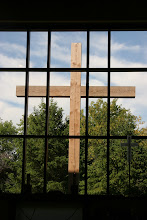
“In the waters of baptism, we are reborn children of God and inheritors of eternal life.” (from the service of Holy Baptism, ELW)
“Woe, woe, O great city, Babylon the powerful city! For in a single hour your doom has come!”(Revelation 18:10)
As a pastor, I often get asked questions that I don’t have answers for, for example, questions about heaven and hell and God’s judgment.
Most people don’t really wonder about their own face to face meeting with God. As baptized children of God, we are confident that our baptismal promises hold up. Eugene Peterson observes that even in the face of accumulating and not-yet-avenged justice, it is most remarkable that communities of faith persevere in believing that God is just and will judge. (Reversed Thunder, p. 138)
We wonder about what will happen to the other people, the murderers, the child molesters, the cheaters, the atheists. It is a question we have been asking for thousands of years.
How long must I bear pain in my soul, and have sorrow in my heart all day long? How long shall my enemy be exalted over me? (Psalms 13:2 NRSV)
Why do we wonder about these “other” people when we are confident in our promise of salvation? Do we hope we can do something to help them turn around and repent? Or do we wish for them a swift and just punishment? Sometimes life doesn’t seem fair. We don’t always get, on this earth, what we deserve.
The book of Revelation shows us, in so many ways, the world in which we live. It provides “images that show us what is going on in our lives. ‘If there are mysterious powers around,’ a character in a Saul Bellow novel says, ‘only exaggeration can help us to see them.’” (Reversed Thunder, 145)
Revelation exaggerates not only what is going on around us, but it exaggerates our own lives, calls each one of us to examine how we live, and why we need to repent. Each of us will face God and be called to account for our lives. And each of us will be forgiven.
Revelation shows that God is in control of the whole universe in heaven and on earth. Revelation reminds us that our relationship with God begins with worship.
Eugene Peterson writes, “The word hallelujah occurs in Revelation for the first time in Chapter 19, verse 1. The timing is exactly right, protecting our gratitude and relief for judgment from degenerating into gloating over the judged… Longing for judgment is only a step removed from a demand for revenge. The desire for God’s judgment always totters on the edge of wanting to see our enemies writhe in pain. The saint, wanting God’s judgment to set things right, has a way of slithering into the sadist who takes pleasure in seeing his tormentors punished. [In Revelation] four hallelujahs pull us from the edge of gloating over pain and back to the act of worship where we are humble and adoring in the presence of the Glory.” (Reversed Thunder, 148-9)
“In the waters of baptism, we are reborn children of God and inheritors of eternal life.” Amen.
Monday, January 25, 2010

Monday, January 18, 2010
A New Year, the same you
Do you not know that your body is the temple of the Holy Spirit who is in you, whom you have from God, and you are not your own? For you were bought at a price. Therefore glorify God with your body. (1 Corinthians 6:19)
It’s that time of the year when we are trying to fulfill our New Year’s resolutions. Most of the festivities of the holidays are over, and even though I still have about 3 dozen Christmas cookies left in the walk-out freezer (the porch), I am trying to eat healthier and lose 10 pounds. I should just throw those little tempters out.
I heard on the radio this morning that the most common New Year’s resolutions have to do with money and health. These things are at the top of the list of things that we want to improve, and yet we really need to work hard at improving them.
According to an article in Seeds for the Parish, “Health is on the tip of the nation’s tongue these days. Health insurance reform, influenza, depression, childhood obesity, the plight of the uninsured … these top a long list of challenging, health-related topics. But there’s a bright spot. Each of us is a steward of gifts given. As a new creation in Christ, we can take steps, today, to change our lifestyle. As individuals, family members, neighbors and congregational leaders, we can work—to the best of our ability —to be healthier in mind, body and spirit.”
What are you doing to respect the temple of the Holy Spirit that is your body, the gift God has given you in which you dwell? You are not simply changing your shape when you chose to live in a healthy way. You are worshiping the one who created you and loves you, even through your struggles and temptations.
Eight reasons to Live Well
1. To be a more effective leader for the sake of the world
2. To role-model healthy behaviors for our children
3. To have a healthier relationship with God
4. To endure hardship with resilience and grace
5. To feel better in mind and body
6. To avoid lifestyle-related illness
7. To better steward gifts given by God
8. To age with strength and dignity
Remember, in baptism you are a new creation in Christ. Every day, and at all times, you can make the sign of the cross on your forehead remembering your baptism and begin anew.
It’s that time of the year when we are trying to fulfill our New Year’s resolutions. Most of the festivities of the holidays are over, and even though I still have about 3 dozen Christmas cookies left in the walk-out freezer (the porch), I am trying to eat healthier and lose 10 pounds. I should just throw those little tempters out.
I heard on the radio this morning that the most common New Year’s resolutions have to do with money and health. These things are at the top of the list of things that we want to improve, and yet we really need to work hard at improving them.
According to an article in Seeds for the Parish, “Health is on the tip of the nation’s tongue these days. Health insurance reform, influenza, depression, childhood obesity, the plight of the uninsured … these top a long list of challenging, health-related topics. But there’s a bright spot. Each of us is a steward of gifts given. As a new creation in Christ, we can take steps, today, to change our lifestyle. As individuals, family members, neighbors and congregational leaders, we can work—to the best of our ability —to be healthier in mind, body and spirit.”
What are you doing to respect the temple of the Holy Spirit that is your body, the gift God has given you in which you dwell? You are not simply changing your shape when you chose to live in a healthy way. You are worshiping the one who created you and loves you, even through your struggles and temptations.
Eight reasons to Live Well
1. To be a more effective leader for the sake of the world
2. To role-model healthy behaviors for our children
3. To have a healthier relationship with God
4. To endure hardship with resilience and grace
5. To feel better in mind and body
6. To avoid lifestyle-related illness
7. To better steward gifts given by God
8. To age with strength and dignity
Remember, in baptism you are a new creation in Christ. Every day, and at all times, you can make the sign of the cross on your forehead remembering your baptism and begin anew.
Monday, January 11, 2010
Peanuts and Wisdom
And Solomon said , “And now, O Lord my God, you have made your servant king in place of my father David, although I am only a little child; I do not know how to go out or come in.
Give your servant therefore an understanding mind to govern your people, able to discern between good and evil; for who can govern this your great people?" 1 Kings 3: 7,9
George Washington Carver was born in 1865, and died in 1943 at the age of 78. A former slave, during his life he became inventor, scientist, businessperson, service industry employee, agriculturist, medical worker, artist, author, lecturer, domestic, reformer, and performing artist.
As a member of the faculty of Iowa State College of Agriculture and Mechanic Arts, he worked with agricultural products and developed industrial applications from farm products. His research developed 325 products from peanuts, 108 applications for sweet potatoes, and 75 products derived from peanuts. He also developed over 500 dyes and pigments from 28 different plants, and was responsible for the invention in 1927 of a process for producing paints and stains from soybeans, from which three separate patents were issued.
“God’s little workshop” was the name George Washington Carver gave his laboratory. It was there that the famous scientist asked in prayer to discover the uses of what was then a lowly, unesteemed crop—peanuts.
“Dear Mr. Creator,” the humble man began, “please tell me what the universe was made for.”
“Ask for something more in keeping with that little mind of yours,” God answered.
So Carver tried again. “Dear Mr. Creator, what was man made for?”
Again the Lord replied, “Little man, you ask too much. Cut down the extent of your request and improve the intent.”
So the scientist tried once more. “Then, Mr. Creator, will you tell me why the peanut was made?”
“That’s better,” the Lord said, and from that day on Carver began to discover more than 300 uses for the lowly peanut!
What do George Washington Carver and King Solomon have in common? Both asked for a hearing heart. In 1 Kings 3:6-9, Solomon recognized that God’s kindness to David was because of his father’s faithfulness to God, which manifested itself in righteous actions and upright attitudes of heart. Also, he was concerned that he would be able to function effectively as the representative of God. His responsibility as the leader and judge of God’s people weighed heavily on him.
So he requested a “hearing heart,” tuned to the voice of God, so he could lead Israel as God desired. He acknowledged his dependence on God by referring to himself as God’s servant (1 Kings 3:7-8). As a result, God granted his request and gave him great wisdom.
Two men asked for a hearing heart. God gave one the privilege of discovering the value of a peanut, and to the other he gave immeasurable wisdom.
I wonder what God will give us if we ask for a hearing heart today. If you need wisdom, ask him, and he will gladly give it to you.
Peace,
Pastor Carrie Scheller
Give your servant therefore an understanding mind to govern your people, able to discern between good and evil; for who can govern this your great people?" 1 Kings 3: 7,9
George Washington Carver was born in 1865, and died in 1943 at the age of 78. A former slave, during his life he became inventor, scientist, businessperson, service industry employee, agriculturist, medical worker, artist, author, lecturer, domestic, reformer, and performing artist.
As a member of the faculty of Iowa State College of Agriculture and Mechanic Arts, he worked with agricultural products and developed industrial applications from farm products. His research developed 325 products from peanuts, 108 applications for sweet potatoes, and 75 products derived from peanuts. He also developed over 500 dyes and pigments from 28 different plants, and was responsible for the invention in 1927 of a process for producing paints and stains from soybeans, from which three separate patents were issued.
“God’s little workshop” was the name George Washington Carver gave his laboratory. It was there that the famous scientist asked in prayer to discover the uses of what was then a lowly, unesteemed crop—peanuts.
“Dear Mr. Creator,” the humble man began, “please tell me what the universe was made for.”
“Ask for something more in keeping with that little mind of yours,” God answered.
So Carver tried again. “Dear Mr. Creator, what was man made for?”
Again the Lord replied, “Little man, you ask too much. Cut down the extent of your request and improve the intent.”
So the scientist tried once more. “Then, Mr. Creator, will you tell me why the peanut was made?”
“That’s better,” the Lord said, and from that day on Carver began to discover more than 300 uses for the lowly peanut!
What do George Washington Carver and King Solomon have in common? Both asked for a hearing heart. In 1 Kings 3:6-9, Solomon recognized that God’s kindness to David was because of his father’s faithfulness to God, which manifested itself in righteous actions and upright attitudes of heart. Also, he was concerned that he would be able to function effectively as the representative of God. His responsibility as the leader and judge of God’s people weighed heavily on him.
So he requested a “hearing heart,” tuned to the voice of God, so he could lead Israel as God desired. He acknowledged his dependence on God by referring to himself as God’s servant (1 Kings 3:7-8). As a result, God granted his request and gave him great wisdom.
Two men asked for a hearing heart. God gave one the privilege of discovering the value of a peanut, and to the other he gave immeasurable wisdom.
I wonder what God will give us if we ask for a hearing heart today. If you need wisdom, ask him, and he will gladly give it to you.
Peace,
Pastor Carrie Scheller
Monday, January 4, 2010
Revelation and the End of All Things
After this I looked, and there in heaven a door stood open! And the first voice, which I had heard speaking to me like a trumpet, said, "Come up here, and I will show you what must take place after this." (Revelation 4: 1)
During the month of January, I will be studying the book of Revelation in preparation for teaching and preaching. The first time I did a Revelation bible study with a group was almost 8 years ago. The location was a nursing home. After my first class, a woman came up to me to tell me that her father had been a pastor. He didn’t like the book of Revelation, she said, because it frightened people. I think she might have even said that her dad thought the book was dangerous.
I don’t think that’s an uncommon sentiment towards what some people believe to be the most difficult and mysterious book in the bible. There are frightening and mysterious images and symbolism throughout the book of Revelation.
But I hope that you will join me this month and give Revelation a chance. What you will find when we read and learn together is another book in the bible that is filled with law and gospel. You will find a book that is filled with hope and promise. And you will find some brilliant and interesting and even entertaining literature.
In Revelation, John, an apostle of Jesus Christ receives a vision of heaven. “John (and thereby his readers with him) is taken up into heaven in order to see the world from the heavenly perspective. He is given a glimpse behind the scenes of history so that he can see what is really going on in the events of his time and place. He is also transported in vision into the final future of the world, so that he can see the present from the perspective of what its final outcome must be, in God’s ultimate purpose for human history. … It is not that the here-and-now are left behind in an escape into heaven or the [end-time] future, but that the here-and-now look quite different when they are opened up to [God’s presence].” (from The Theology of the Book of Revelation by Richard Bauckham: Cambridge University Press, Cambridge UK, 2001. P. 7-8.)
I invite you to discover Revelation, maybe again and maybe for the first time. The hope and promise of God in Jesus Christ be with you! Amen.
During the month of January, I will be studying the book of Revelation in preparation for teaching and preaching. The first time I did a Revelation bible study with a group was almost 8 years ago. The location was a nursing home. After my first class, a woman came up to me to tell me that her father had been a pastor. He didn’t like the book of Revelation, she said, because it frightened people. I think she might have even said that her dad thought the book was dangerous.
I don’t think that’s an uncommon sentiment towards what some people believe to be the most difficult and mysterious book in the bible. There are frightening and mysterious images and symbolism throughout the book of Revelation.
But I hope that you will join me this month and give Revelation a chance. What you will find when we read and learn together is another book in the bible that is filled with law and gospel. You will find a book that is filled with hope and promise. And you will find some brilliant and interesting and even entertaining literature.
In Revelation, John, an apostle of Jesus Christ receives a vision of heaven. “John (and thereby his readers with him) is taken up into heaven in order to see the world from the heavenly perspective. He is given a glimpse behind the scenes of history so that he can see what is really going on in the events of his time and place. He is also transported in vision into the final future of the world, so that he can see the present from the perspective of what its final outcome must be, in God’s ultimate purpose for human history. … It is not that the here-and-now are left behind in an escape into heaven or the [end-time] future, but that the here-and-now look quite different when they are opened up to [God’s presence].” (from The Theology of the Book of Revelation by Richard Bauckham: Cambridge University Press, Cambridge UK, 2001. P. 7-8.)
I invite you to discover Revelation, maybe again and maybe for the first time. The hope and promise of God in Jesus Christ be with you! Amen.
Monday, December 28, 2009
Christmas Faith
“We act in faith - and miracles occur. In consequence, we are tempted to make the miracles the ground for our faith. The cost of such weakness is that we lose the confidence of faith. Faith is, faith creates, faith carries. It is not derived from, nor created, nor carried by anything except its own reality.”
From Markings by Dag Hammarskjold (Vintage Books, New York 2006) p. 145.
From Markings by Dag Hammarskjold (Vintage Books, New York 2006) p. 145.
Monday, December 21, 2009
The Miracle of Christmas
In the time of King Herod, after Jesus was born in Bethlehem of Judea, wise men from the East came to Jerusalem, asking, "Where is the child who has been born king of the Jews? For we observed his star at its rising, and have come to pay him homage." When King Herod heard this, he was frightened, and all Jerusalem with him; and calling together all the chief priests and scribes of the people, he inquired of them where the Messiah was to be born. (Matthew 2: 1-4)
On a website called The Bethlehem Star, the science and truth and meaning of the star that led the wise men to Christ’s manger-bed is explored. In an effort to “set the stage” the authors of this site pose the following thoughts for us to ponder.
“THE STAR OF BETHLEHEM FASCINATES. For millennia, believers, scoffers and the curious have wondered at the Biblical account of the Star. The Bible recounts unusual or even impossible astronomical events at Christ's birth. For many doubters, the account of the Star is easily dismissed as myth. For many believers, it's a mystery accepted on faith. But what happens if we combine current historical scholarship, astronomical fact and an open mind? Judge for yourself...”
Is the star an impossible astronomical event? Would your faith in the events of Christmas be changed if you found out that the star wasn’t real, that it had been an illusion? Or even a myth?
In the introduction to “The Martin Luther Christmas Book” (translated and arranged by Roland H. Bainton) we find that Luther himself was not primarily interested in the miracles surrounding the Christmas story. Did angels really appear to the shepherds? Did, as the carol has it, “ox and ass before him bow?” Luther believed that the purpose of these stories, whether factual or fabricated, help us to understand the impact of the real miracle.
Bainton writes of Luther’s faith in real miracle of Christmas. “Christian teaching is that in Christ, God became flesh. Compared with that, no particular miracle matters much. If one could but believe that God lay in the manger, one could let go the star and the angel’s song, and yet keep the faith. The question was not whether God could or would make a special star, but why the Lord of the universe should care enough about us mortals to take our flesh and share our woes. The condescension of God was the great wonder.” (p. 12)
And suddenly there was with the angel a multitude of the heavenly host, praising God and saying, “Glory to God in the highest heaven, and on earth peace among those whom he favors!" (Luke 2: 13-14)
It is Christmas time, a halting of hate time. On this platform of peace, we can create a language to translate ourselves to ourselves and to each other. At this Holy Instant, we celebrate the birth of Jesus Christ into the great religions of the world. We jubilate the precious advent of trust. We shout with glorious tongues the coming of hope....Look heavenward and speak the word aloud. Peace. We look at the world and speak the word aloud. Peace. We look at each other, then into ourselves, and we say without shyness or apology or hesitation: Peace, My Brother. Peace, My Sister. Peace, My Soul. (From Amazing Peace: A Christmas Poem by Dr. Maya Angelou)
On a website called The Bethlehem Star, the science and truth and meaning of the star that led the wise men to Christ’s manger-bed is explored. In an effort to “set the stage” the authors of this site pose the following thoughts for us to ponder.
“THE STAR OF BETHLEHEM FASCINATES. For millennia, believers, scoffers and the curious have wondered at the Biblical account of the Star. The Bible recounts unusual or even impossible astronomical events at Christ's birth. For many doubters, the account of the Star is easily dismissed as myth. For many believers, it's a mystery accepted on faith. But what happens if we combine current historical scholarship, astronomical fact and an open mind? Judge for yourself...”
Is the star an impossible astronomical event? Would your faith in the events of Christmas be changed if you found out that the star wasn’t real, that it had been an illusion? Or even a myth?
In the introduction to “The Martin Luther Christmas Book” (translated and arranged by Roland H. Bainton) we find that Luther himself was not primarily interested in the miracles surrounding the Christmas story. Did angels really appear to the shepherds? Did, as the carol has it, “ox and ass before him bow?” Luther believed that the purpose of these stories, whether factual or fabricated, help us to understand the impact of the real miracle.
Bainton writes of Luther’s faith in real miracle of Christmas. “Christian teaching is that in Christ, God became flesh. Compared with that, no particular miracle matters much. If one could but believe that God lay in the manger, one could let go the star and the angel’s song, and yet keep the faith. The question was not whether God could or would make a special star, but why the Lord of the universe should care enough about us mortals to take our flesh and share our woes. The condescension of God was the great wonder.” (p. 12)
And suddenly there was with the angel a multitude of the heavenly host, praising God and saying, “Glory to God in the highest heaven, and on earth peace among those whom he favors!" (Luke 2: 13-14)
It is Christmas time, a halting of hate time. On this platform of peace, we can create a language to translate ourselves to ourselves and to each other. At this Holy Instant, we celebrate the birth of Jesus Christ into the great religions of the world. We jubilate the precious advent of trust. We shout with glorious tongues the coming of hope....Look heavenward and speak the word aloud. Peace. We look at the world and speak the word aloud. Peace. We look at each other, then into ourselves, and we say without shyness or apology or hesitation: Peace, My Brother. Peace, My Sister. Peace, My Soul. (From Amazing Peace: A Christmas Poem by Dr. Maya Angelou)
Monday, December 14, 2009
Are You Ready?
No one can celebrate a genuine Christmas without truly being poor. The self-sufficient, the proud, those who, because they have everything, look down on others, those who have no need even of God – for them there will be no Christmas. Only the poor the hungry, those who need someone to come on their behalf, they will have someone. That someone is God. Emmanuel. God-with-us. Without poverty of the spirit, there can be no abundance of God. ~Oscar Romero~
At church last Sunday, I asked most of the people with whom I chatted before and after services, “are you ready?” and the most common answer was “not at all!” We are busy with our preparations, our baking and cooking, our shopping and everything else that comes with Christmas anticipation. We have to be ready!, to have everything done by December 24th so we can enjoy a leisurely holiday, give our gifts and share a festive meal with family and friends.
In an Advent devotion, Bishop William Willimon wonders, in this season of generous giving, if it is more difficult for us to be the receivers than the givers. He writes, “We enjoy thinking of ourselves as basically generous, benevolent, giving people… Yet I suggest we are better givers than getters, not because we are generous people, but because we are proud, arrogant people. The Christmas story [according to Luke] is not about how blessed it is to be givers but how essential it is to see ourselves as receivers.” (p. 143, 44)
In the biblical account of the first Christmas, “we are portrayed not as the givers we wish we were, but as the receivers we are. Luke and Matthew go to great lengths to demonstrate that we – with our power, generosity, competence and capabilities – had little to do with God’s work in Jesus. God wanted to do something so strange, so utterly beyond the bounds of human imagination, so foreign to human projection, that God had to resort to angels, pregnant virgins, and stars in the sky to get it done. We didn’t think of it, understand it or approve it. All we could do, at Bethlehem, was receive it.” (p. 145)
“This strange story tells us how to be receivers. The first word of the church, a people born out of so odd a nativity, is that we are receivers before we are givers. Discipleship teaches us the art of seeing our lives as gifts. That’s tough, because I would rather see myself as a giver. I want power – to stand on my own, take charge, set things to rights, perhaps to help those who have nothing. I don’t like picturing myself as dependent, needy, empty handed.” (p. 147)
“It’s tough to be on the receiving end of love, God’s or anyone else’s. It requires that we see our lives not as our possessions, but as gifts. ‘Nothing is more repugnant to capable, reasonable people than grace,’ wrote John Wesley a long time ago.”(p. 148)
God’s love comes to us in a way that we don’t expect. We receive a gift that “we thought we didn’t need, which transforms us into people we don’t necessarily want to be. With our advanced degrees, armies… and material comforts… we assume that religion is about giving a little of our power in order to confirm to ourselves that we are indeed as self-sufficient as we claim.
Then this stranger comes to us, blesses us with a gift, and calls us to see ourselves as we are – empty-handed recipients of a gracious God who, rather than leave us to our own devices, gave us a baby.” (p. 149) Are you ready for that?
Adapted and excerpted from “The God We Hardly Knew,” by William Willimon, found at religion-online, and also in the book, “Watch For the Light: Readings for Advent and Christmas” Orbis Books, Maryknoll, New York, 2004, p 141-149.
At church last Sunday, I asked most of the people with whom I chatted before and after services, “are you ready?” and the most common answer was “not at all!” We are busy with our preparations, our baking and cooking, our shopping and everything else that comes with Christmas anticipation. We have to be ready!, to have everything done by December 24th so we can enjoy a leisurely holiday, give our gifts and share a festive meal with family and friends.
In an Advent devotion, Bishop William Willimon wonders, in this season of generous giving, if it is more difficult for us to be the receivers than the givers. He writes, “We enjoy thinking of ourselves as basically generous, benevolent, giving people… Yet I suggest we are better givers than getters, not because we are generous people, but because we are proud, arrogant people. The Christmas story [according to Luke] is not about how blessed it is to be givers but how essential it is to see ourselves as receivers.” (p. 143, 44)
In the biblical account of the first Christmas, “we are portrayed not as the givers we wish we were, but as the receivers we are. Luke and Matthew go to great lengths to demonstrate that we – with our power, generosity, competence and capabilities – had little to do with God’s work in Jesus. God wanted to do something so strange, so utterly beyond the bounds of human imagination, so foreign to human projection, that God had to resort to angels, pregnant virgins, and stars in the sky to get it done. We didn’t think of it, understand it or approve it. All we could do, at Bethlehem, was receive it.” (p. 145)
“This strange story tells us how to be receivers. The first word of the church, a people born out of so odd a nativity, is that we are receivers before we are givers. Discipleship teaches us the art of seeing our lives as gifts. That’s tough, because I would rather see myself as a giver. I want power – to stand on my own, take charge, set things to rights, perhaps to help those who have nothing. I don’t like picturing myself as dependent, needy, empty handed.” (p. 147)
“It’s tough to be on the receiving end of love, God’s or anyone else’s. It requires that we see our lives not as our possessions, but as gifts. ‘Nothing is more repugnant to capable, reasonable people than grace,’ wrote John Wesley a long time ago.”(p. 148)
God’s love comes to us in a way that we don’t expect. We receive a gift that “we thought we didn’t need, which transforms us into people we don’t necessarily want to be. With our advanced degrees, armies… and material comforts… we assume that religion is about giving a little of our power in order to confirm to ourselves that we are indeed as self-sufficient as we claim.
Then this stranger comes to us, blesses us with a gift, and calls us to see ourselves as we are – empty-handed recipients of a gracious God who, rather than leave us to our own devices, gave us a baby.” (p. 149) Are you ready for that?
Adapted and excerpted from “The God We Hardly Knew,” by William Willimon, found at religion-online, and also in the book, “Watch For the Light: Readings for Advent and Christmas” Orbis Books, Maryknoll, New York, 2004, p 141-149.
Subscribe to:
Posts (Atom)