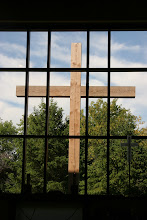
"Your kingdom come…"
"If you love those who love you, what credit is that to you? For even sinners love those who love them. If you do good to those who do good to you, what credit is that to you? For even sinners do the same. If you lend to those from whom you hope to receive, what credit is that to you? Even sinners lend to sinners, to receive as much again. But love your enemies, do good, and lend, expecting nothing in return. (Luke 6: 32-35)
A friend of mine recently shared with me how she had lifted up in prayer someone with whom she was angry. She said it was as if, after her prayer, God took away her anger. She felt like her relationship was soothed, and she gained a new perspective on the conflict with this person, and she also had a renewed feeling of love and appreciation for the person, realizing that each of us are children of God, part of the kingdom, imperfect sinners.
I don’t know if this relationship was perfectly healed and restored by this one prayer, but a window was opened that let the light of the gospel in. Love and forgiveness are elements that the kingdom of heaven brings into our lives. Jesus teaches us that because we are part of the kingdom, with God as our ruler, we are free to bring our sins, our hurt and our anger to him, and to be refreshed with his grace.
Prayer for today
Grace filled God, fill our lives with your grace. Teach us that because you forgive us, we are free to forgive others, and that when we see even our enemies as your children, we realize that your kingdom is big enough for us all. Thank you for your guiding presence in our lives. Amen.
Saturday, March 7, 2009

Wednesday, March 4, 2009
“Your Kingdom Come…”
So we do not lose heart. Even though our outer nature is wasting away, our inner nature is being renewed day by day. For this slight momentary affliction is preparing us for an eternal weight of glory beyond all measure, because we look not at what can be seen but at what cannot be seen; for what can be seen is temporary, but what cannot be seen is eternal. (2 Corinthians 4: 16-18)
We live in what is sometimes called “the time between.” God’s kingdom has come into the world, and we have a very real sense of what that looks like, because we have a very real sense of Jesus. It was in the person of Jesus that God burst into the world, God with us, bringing all that God promises us right in the midst of where we actually live. We don’t need to imagine God’s love because we have the words and the actions of Jesus right in front of us, making it perfectly clear. “The kingdom of God is among you.” (Jesus’ words in Luke 17:21)
But, still, we are between. Jesus has come, and he will come again. What we are anticipating is the fullness and completion of the kingdom, the time when all of our questions will be answered and all will be made right. We are anticipating that eternal weight of glory beyond all measure that cannot now be seen.
That doesn’t mean that we are not able to experience God’s kingdom in this life. We certainly can, every day. We are promised that God’s kingdom is here among us, and it shows itself in many different ways.
Roberta Bondi writes that each of us experiences the kingdom “according to what we are able to receive.” (p 43) If we are not open or willing, we might miss it – it’s there, but we might not notice.
Prayer for today
God, help us to be mindful of how you are working in our lives. We are living in unsure times; help us to be sure of your kingdom. In Jesus name, Amen.
So we do not lose heart. Even though our outer nature is wasting away, our inner nature is being renewed day by day. For this slight momentary affliction is preparing us for an eternal weight of glory beyond all measure, because we look not at what can be seen but at what cannot be seen; for what can be seen is temporary, but what cannot be seen is eternal. (2 Corinthians 4: 16-18)
We live in what is sometimes called “the time between.” God’s kingdom has come into the world, and we have a very real sense of what that looks like, because we have a very real sense of Jesus. It was in the person of Jesus that God burst into the world, God with us, bringing all that God promises us right in the midst of where we actually live. We don’t need to imagine God’s love because we have the words and the actions of Jesus right in front of us, making it perfectly clear. “The kingdom of God is among you.” (Jesus’ words in Luke 17:21)
But, still, we are between. Jesus has come, and he will come again. What we are anticipating is the fullness and completion of the kingdom, the time when all of our questions will be answered and all will be made right. We are anticipating that eternal weight of glory beyond all measure that cannot now be seen.
That doesn’t mean that we are not able to experience God’s kingdom in this life. We certainly can, every day. We are promised that God’s kingdom is here among us, and it shows itself in many different ways.
Roberta Bondi writes that each of us experiences the kingdom “according to what we are able to receive.” (p 43) If we are not open or willing, we might miss it – it’s there, but we might not notice.
Prayer for today
God, help us to be mindful of how you are working in our lives. We are living in unsure times; help us to be sure of your kingdom. In Jesus name, Amen.
Tuesday, March 3, 2009
“Hallowed be your name…”
The name of God is holy, there is no doubt about that.
In Jewish tradition, God’s name is so holy that it cannot be spoken by human lips, or even written by human hands. “Lord” or “God” is translated in the Old Testament in place of the name which God gives God's self, Yahweh, the Hebrew word for “I Am.”
It might be intimidating to think of holiness, especially of the holiness of God, and especially as it relates to us. I have always considered myself less that holy, simply because of the way I live in the world. I am not always as prayerful or pious or even as kind and considerate as I think God would have me be.
Acquiring the title of “Reverend” when I became an ordained member of the clergy seemed quite inappropriate for someone, some regular, unholy person like me.
I have come to realize that the holiness of God is not something that is out of our reach. It is also not something to which we should try to aspire. The holiness of God is found in the name of God, and in God’s presence in our lives, which means that everything we do is infused with the holiness of God. Even while I shop for groceries or shovel snow or clean the bathroom, the mundane tasks of everyday life, God promises to be present. That promise makes those tasks holy.
And then there might be those extraordinary moments of awe and wonder, the moments of peace and beauty, when we can actually feel the presence of God. It is in those moments that we are blessed to know that we are standing on holy ground. But I don’t think that makes them any more, or any less holy then the everyday.
Roberta Bondi writes, “An experience of God’s holiness is an experience of God’s holiness whether we name it or not.” (p 40) Our lives as children of the great “I Am” are hallowed, simply because we are God’s children.
Prayer for Today (French p 34)
Holy God, enable me to see that all ground is holy ground for you are always with us. Amen.
The name of God is holy, there is no doubt about that.
In Jewish tradition, God’s name is so holy that it cannot be spoken by human lips, or even written by human hands. “Lord” or “God” is translated in the Old Testament in place of the name which God gives God's self, Yahweh, the Hebrew word for “I Am.”
It might be intimidating to think of holiness, especially of the holiness of God, and especially as it relates to us. I have always considered myself less that holy, simply because of the way I live in the world. I am not always as prayerful or pious or even as kind and considerate as I think God would have me be.
Acquiring the title of “Reverend” when I became an ordained member of the clergy seemed quite inappropriate for someone, some regular, unholy person like me.
I have come to realize that the holiness of God is not something that is out of our reach. It is also not something to which we should try to aspire. The holiness of God is found in the name of God, and in God’s presence in our lives, which means that everything we do is infused with the holiness of God. Even while I shop for groceries or shovel snow or clean the bathroom, the mundane tasks of everyday life, God promises to be present. That promise makes those tasks holy.
And then there might be those extraordinary moments of awe and wonder, the moments of peace and beauty, when we can actually feel the presence of God. It is in those moments that we are blessed to know that we are standing on holy ground. But I don’t think that makes them any more, or any less holy then the everyday.
Roberta Bondi writes, “An experience of God’s holiness is an experience of God’s holiness whether we name it or not.” (p 40) Our lives as children of the great “I Am” are hallowed, simply because we are God’s children.
Prayer for Today (French p 34)
Holy God, enable me to see that all ground is holy ground for you are always with us. Amen.
Monday, March 2, 2009
"Jerusalem, Jerusalem, the city that kills the prophets and stones those who are sent to it! How often have I desired to gather your children together as a hen gathers her brood under her wings, and you were not willing! (Matthew 23:37)
“Our Father in heaven…” (Matthew 6:9)
From these two passages of scripture we get two different images of God. The first is a worried mother. Jesus speaks as a prophet for God, and uses the image of a mother hen, who longed to care tenderly for Israel and protect her.
The second is from the Lord’s Prayer, the image of Father. Henry French reminds us of the patriarchal context of Jesus’ world, where a father image for God would probably by the only image that people would take seriously. But Jesus also boldly uses the image of a mother who longs to gather her children together to keep them safe.
Both images are in the bible. Both images of God are “correct,” images that we can use when we think of or pray to God.
Once, about 10 years ago, while preparing a sermon on the Holy Spirit, I decided to use the word “she” every time I mentioned God or the Holy Spirit. I was trying to stretch my own and my internship congregation’s imaginations when it came to thinking about God. In the end, I didn’t use the feminine language because I thought it would be too shocking for people.
I’m now ready to talk about God as a mother, or as a sister. French writes that some people, because of events in their lives, have a hard time thinking of God as a loving father. “If calling God “mother” opens a wounded soul to the experience of divine love, then why not? After all, God is neither male nor female, but completely transcends gender distinctions. The words father and mother both make the point Jesus was making when he taught his followers to pray “Our Father.” We are dependent upon God as a child to a parent.” (p 25)
Our image of God is our own. God doesn’t care how we think of her, or of him. Our relationship with God depends on a connection with God that not only holds us accountable to a loving parent, but also makes us feel valued, safe and protected.
What is your image of God?
Prayer for today
Gracious and loving God, help us to trust the depth of your love for us, as a mother or a father loves their child. Help us to know you as a loving parent, guiding us and holding us in your hand. Thank you for your unconditional and steadfast love. Amen.
“Our Father in heaven…” (Matthew 6:9)
From these two passages of scripture we get two different images of God. The first is a worried mother. Jesus speaks as a prophet for God, and uses the image of a mother hen, who longed to care tenderly for Israel and protect her.
The second is from the Lord’s Prayer, the image of Father. Henry French reminds us of the patriarchal context of Jesus’ world, where a father image for God would probably by the only image that people would take seriously. But Jesus also boldly uses the image of a mother who longs to gather her children together to keep them safe.
Both images are in the bible. Both images of God are “correct,” images that we can use when we think of or pray to God.
Once, about 10 years ago, while preparing a sermon on the Holy Spirit, I decided to use the word “she” every time I mentioned God or the Holy Spirit. I was trying to stretch my own and my internship congregation’s imaginations when it came to thinking about God. In the end, I didn’t use the feminine language because I thought it would be too shocking for people.
I’m now ready to talk about God as a mother, or as a sister. French writes that some people, because of events in their lives, have a hard time thinking of God as a loving father. “If calling God “mother” opens a wounded soul to the experience of divine love, then why not? After all, God is neither male nor female, but completely transcends gender distinctions. The words father and mother both make the point Jesus was making when he taught his followers to pray “Our Father.” We are dependent upon God as a child to a parent.” (p 25)
Our image of God is our own. God doesn’t care how we think of her, or of him. Our relationship with God depends on a connection with God that not only holds us accountable to a loving parent, but also makes us feel valued, safe and protected.
What is your image of God?
Prayer for today
Gracious and loving God, help us to trust the depth of your love for us, as a mother or a father loves their child. Help us to know you as a loving parent, guiding us and holding us in your hand. Thank you for your unconditional and steadfast love. Amen.
Thursday, February 26, 2009
“Our Father in heaven, hallowed be your name…”
In the Lenten devotional, 40 Days with the Lord’s Prayer, Henry French reminds us of the importance of the little words that we find in the bible. Today, take a moment to ponder the important little word “our,” as in, "Our Father." French writes, “It implies something in common, as in, “We went to Europe for a week but our flight was delayed, our baggage got lost, our accommodations were terrible… Two or more people with a common experience, a common possession, a common hope, a common fear, a common joy, a common sorrow.” (p 23)
In my first call, I worked with single’s ministry, and I became keenly aware of the family orientation of the church. Many ministries are devoted to families, children and couples. There are lots of stories and descriptions of how “we” did this in “our” lives. For people who weren’t part of a couple, or didn’t live with a family, the church might become a painful and exclusive place.
My husband grew up in the Roman Catholic tradition and he calls the Lord’s Prayer “the Our Father.” It’s a good and descriptive name. It reminds us that whether or not we have a specific person to share our experiences, we are never alone. When we pray “the Our Father,” we are reminded that we share a parent with all of our brothers and sisters in the family of Christ. As we pray, we are praying together with those brothers and sisters, and they in turn, are praying with us.
[There is] one God and Father of all, who is above all and through all and in all. Ephesians 4:6
Prayer for Today
Lord God, open my eyes that I may see other people part of your family and so, part of the family to which I belong, all loved by you as much as I am loved by you. Amen.
In the Lenten devotional, 40 Days with the Lord’s Prayer, Henry French reminds us of the importance of the little words that we find in the bible. Today, take a moment to ponder the important little word “our,” as in, "Our Father." French writes, “It implies something in common, as in, “We went to Europe for a week but our flight was delayed, our baggage got lost, our accommodations were terrible… Two or more people with a common experience, a common possession, a common hope, a common fear, a common joy, a common sorrow.” (p 23)
In my first call, I worked with single’s ministry, and I became keenly aware of the family orientation of the church. Many ministries are devoted to families, children and couples. There are lots of stories and descriptions of how “we” did this in “our” lives. For people who weren’t part of a couple, or didn’t live with a family, the church might become a painful and exclusive place.
My husband grew up in the Roman Catholic tradition and he calls the Lord’s Prayer “the Our Father.” It’s a good and descriptive name. It reminds us that whether or not we have a specific person to share our experiences, we are never alone. When we pray “the Our Father,” we are reminded that we share a parent with all of our brothers and sisters in the family of Christ. As we pray, we are praying together with those brothers and sisters, and they in turn, are praying with us.
[There is] one God and Father of all, who is above all and through all and in all. Ephesians 4:6
Prayer for Today
Lord God, open my eyes that I may see other people part of your family and so, part of the family to which I belong, all loved by you as much as I am loved by you. Amen.
Wednesday, February 25, 2009
Ash Wednesday Sermon
Pastor Carrie Scheller
Feb 25, 2009
Joel 2: 1-2, 12-17
Matthew 6: 1-15
Today is Ash Wednesday, a solemn day of prayer that begins the forty- day season of Lent. I’ve often heard Ash Wednesday being compared to the Jewish Day of Atonement, the day on the Jewish calendar set aside for people to acknowledge and confess their sins, and also to atone for them, and to reconcile themselves to God. A Jewish friend of mine once tried to explain the day to me, reminding me that it was not really a holiday, but a day to afflict the soul, to remind oneself of all of the sins committed during the past year, and to try to make things right with people and with God by offering reparation or apology. He warned me, “Never wish anyone ‘happy day of atonement.’
I don’t think we would ever wish anyone happy Ash Wednesday either. It’s on this day that Christians also make a special effort to remember and confess our sin. It’s the beginning of the season on our church calendar when we are invited to carry out the Lenten discipline, practices of fasting, prayer and works of love. It’s also on this day that we receive the sign of the cross, made with ashes, on our forehead. This ancient symbol of repentance reminds us of our mortality. Returning to God’s mercy and grace, marked with the cross of Christ, we make our way through Lent, longing for the baptismal waters of Easter, our spiritual rebirth. (ELW p 248)
This Lenten season our focus at Trinity will be on prayer, specifically the Lord’s Prayer. Each week, Pastor Kent and I will speak about the way that our lives and our faith are shaped by this very important prayer that Jesus taught us with the expectation that we pray it. A Lenten devotional will be posted on the Trinity website that will guide you through an aspect of the Lord’s Prayer each day during Lent. Together we will discover that this prayer contains many facets and nuances.
We’ve become very familiar with this special and wonderful prayer. It was probably one of the first things that you memorized in Sunday school. It might contain the comforting words that you turn to first when you are worried, or scared, or in danger of any kind. It’s the prayer that we all know. It doesn’t matter where I am, if I invite people to pray with me in the words that Jesus taught us, they know what I mean, and they know what to say.
This Lenten season and beyond, I invite you to start to ponder, as you pray the Lord’s Prayer, what it means to you, and for you, and for the rest of the world. Jesus didn’t give us this prayer so we had something easy to memorize and so we wouldn’t have to think in order to pray. As we pray and study the Lord’s Prayer, we will discover that it not only describes, but challenges our life together with each other, and with God.
In giving his disciples, and us, the gift of this prayer, Jesus wasn’t laying down the law or telling us what to do – Jesus was inviting us into relationship with God that would be challenging and comforting, and filled with grace. This relationship would judge us and empower us and save us. The more comfortable we become in this relationship by staying connected to God and trying to understand God’s love us and will for our lives, we will be delighted as we discover how far God’s forgiveness goes, far beyond our expectations. (French, p 12) All this will come simply by praying, and thinking about, and talking about the words that Jesus taught us.
The Lord’s Prayer is a prayer which is common to and connects all Christians. We are reminded at the very beginning of this prayer that when we pray, we are never alone. In our individualistic society, it’s easy to fall into the trap of thinking that my spirituality and my prayer is a private matter involving nobody but myself and God. (Bondi p 24)
The Lord’s Prayer reminds us that God is “OUR” Father, and sharing a parent makes us all a part of the same family. In a little book called “A Place to Pray: Reflections on the Lord’s Prayer,” scholar and theologian Roberta Bondi considers what this means for our lives. She writes, “My unity with other Christians, after all, isn’t something that I must make happen myself. Whether I want it or not, the fact is, whenever I speak the words ‘Our Father, give us this day our daily bread,’ by virtue of my baptism I am praying as part of the people of God, and in return, they are praying with me… ‘Our Father’ teaches us we have a place in the family of God to which we belong simply because we are human beings.” (Bondi p 27, 28)
Let us pray
Jesus, you taught us to pray. Now, please grant us the faith and courage not only to boldly pray in the words you taught us, but to follow you in the way of God. Amen.
references:
Bondi, Roberta C. A Place to Pray; Reflections on the Lord's Prayer Abingdon Press, 1998
Evangelical Lutheran Worship Augsburg Fortress, 2006
French, Henry F. book of faith Lenten Journey; 40 Days with the Lord's Prayer Augsburg Books, 2009
Pastor Carrie Scheller
Feb 25, 2009
Joel 2: 1-2, 12-17
Matthew 6: 1-15
Today is Ash Wednesday, a solemn day of prayer that begins the forty- day season of Lent. I’ve often heard Ash Wednesday being compared to the Jewish Day of Atonement, the day on the Jewish calendar set aside for people to acknowledge and confess their sins, and also to atone for them, and to reconcile themselves to God. A Jewish friend of mine once tried to explain the day to me, reminding me that it was not really a holiday, but a day to afflict the soul, to remind oneself of all of the sins committed during the past year, and to try to make things right with people and with God by offering reparation or apology. He warned me, “Never wish anyone ‘happy day of atonement.’
I don’t think we would ever wish anyone happy Ash Wednesday either. It’s on this day that Christians also make a special effort to remember and confess our sin. It’s the beginning of the season on our church calendar when we are invited to carry out the Lenten discipline, practices of fasting, prayer and works of love. It’s also on this day that we receive the sign of the cross, made with ashes, on our forehead. This ancient symbol of repentance reminds us of our mortality. Returning to God’s mercy and grace, marked with the cross of Christ, we make our way through Lent, longing for the baptismal waters of Easter, our spiritual rebirth. (ELW p 248)
This Lenten season our focus at Trinity will be on prayer, specifically the Lord’s Prayer. Each week, Pastor Kent and I will speak about the way that our lives and our faith are shaped by this very important prayer that Jesus taught us with the expectation that we pray it. A Lenten devotional will be posted on the Trinity website that will guide you through an aspect of the Lord’s Prayer each day during Lent. Together we will discover that this prayer contains many facets and nuances.
We’ve become very familiar with this special and wonderful prayer. It was probably one of the first things that you memorized in Sunday school. It might contain the comforting words that you turn to first when you are worried, or scared, or in danger of any kind. It’s the prayer that we all know. It doesn’t matter where I am, if I invite people to pray with me in the words that Jesus taught us, they know what I mean, and they know what to say.
This Lenten season and beyond, I invite you to start to ponder, as you pray the Lord’s Prayer, what it means to you, and for you, and for the rest of the world. Jesus didn’t give us this prayer so we had something easy to memorize and so we wouldn’t have to think in order to pray. As we pray and study the Lord’s Prayer, we will discover that it not only describes, but challenges our life together with each other, and with God.
In giving his disciples, and us, the gift of this prayer, Jesus wasn’t laying down the law or telling us what to do – Jesus was inviting us into relationship with God that would be challenging and comforting, and filled with grace. This relationship would judge us and empower us and save us. The more comfortable we become in this relationship by staying connected to God and trying to understand God’s love us and will for our lives, we will be delighted as we discover how far God’s forgiveness goes, far beyond our expectations. (French, p 12) All this will come simply by praying, and thinking about, and talking about the words that Jesus taught us.
The Lord’s Prayer is a prayer which is common to and connects all Christians. We are reminded at the very beginning of this prayer that when we pray, we are never alone. In our individualistic society, it’s easy to fall into the trap of thinking that my spirituality and my prayer is a private matter involving nobody but myself and God. (Bondi p 24)
The Lord’s Prayer reminds us that God is “OUR” Father, and sharing a parent makes us all a part of the same family. In a little book called “A Place to Pray: Reflections on the Lord’s Prayer,” scholar and theologian Roberta Bondi considers what this means for our lives. She writes, “My unity with other Christians, after all, isn’t something that I must make happen myself. Whether I want it or not, the fact is, whenever I speak the words ‘Our Father, give us this day our daily bread,’ by virtue of my baptism I am praying as part of the people of God, and in return, they are praying with me… ‘Our Father’ teaches us we have a place in the family of God to which we belong simply because we are human beings.” (Bondi p 27, 28)
Let us pray
Jesus, you taught us to pray. Now, please grant us the faith and courage not only to boldly pray in the words you taught us, but to follow you in the way of God. Amen.
references:
Bondi, Roberta C. A Place to Pray; Reflections on the Lord's Prayer Abingdon Press, 1998
Evangelical Lutheran Worship Augsburg Fortress, 2006
French, Henry F. book of faith Lenten Journey; 40 Days with the Lord's Prayer Augsburg Books, 2009
Tuesday, February 10, 2009
Trinity Lutheran Church Lenten Devotional
In an answer to a question from his disciples, Jesus taught us how to pray. His prayer is found in Luke 11: 2-4, and in Matthew 6: 9-13. Below, you can read the Lord’s Prayer from three different translations of the bible. There are many more. This is a short prayer, but it has been called a summary of the whole gospel.
During Lent, not only will we pray together in the words Jesus taught us, but we will try to discover, together, what this prayer means and how, by praying words that are so familiar, we can deepen our relationship with God through Jesus Christ.
Please check back starting February 25th, Ash Wednesday, for a daily Lenten Devotion.
Pastor Carrie Scheller
The Lord’s Prayer – Three translations
With a God like this loving you, you can pray very simply. Like this: Our Father in heaven, Reveal who you are. Set the world right; Do what's best - as above, so below. Keep us alive with three square meals. Keep us forgiven with you and forgiving others. Keep us safe from ourselves and the Devil. You're in charge! You can do anything you want! You're ablaze in beauty! Yes. Yes. Yes. (Matthew 6: 9-13 The Message)
After this manner therefore pray ye: Our Father which art in heaven, Hallowed be thy name. Thy kingdom come. Thy will be done in earth, as it is in heaven. Give us this day our daily bread. And forgive us our debts, as we forgive our debtors. And lead us not into temptation, but deliver us from evil: For thine is the kingdom, and the power, and the glory, for ever. Amen. (Matthew 6: 9-13 King James Version)
"Pray then in this way: Our Father in heaven, hallowed be your name. Your kingdom come. Your will be done, on earth as it is in heaven. Give us this day our daily bread. And forgive us our debts, as we also have forgiven our debtors. And do not bring us to the time of trial, but rescue us from the evil one. (Matthew 6: 9-13 New Revised Standard Version)
Subscribe to:
Posts (Atom)